
Renewable energy is the undisputed Barbie of the climate movement. But responsible U.S. oil and gas production — the American Girl dolls in this analogy — is also iconic, and an important complement to renewables. Here’s why both are critical for the U.S. to have meaningful and durable climate policy.:
The case for responsible U.S. oil and gas in a sentence:
Low-carbon U.S. oil and gas production and use, taxed and regulated progressively, is not just good for America, but it is also better for the global fight against climate change and the progressive policy agenda writ large compared to the pursuit of an aggressive “keep it in the ground” approach today.
The case for responsible U.S. oil and gas in a paragraph:
Oil and gas can be produced and consumed responsibly. We can make oil and gas with near-zero GHG emissions via techniques like methane abatement and carbon capture and storage. We can further regulate the industry to minimize other air and water pollution, maximize safety, and ensure high-road labor standards. And we can tax the industry in ways that support communities dependent on oil and gas jobs and revenues today to diversify their economies to thrive in a clean economy of the future. Even with the most ambitious efforts to scale up renewables and electric alternatives to oil and gas, oil and gas use will persist domestically and abroad for decades to come at a lower, albeit significant, level. If progressives embrace policies that promote responsible U.S. oil and gas production to supply as much of this market as reasonable — alongside advancing regulations and incentives to accelerate the scale up of clean alternatives to fossil fuels — progressives can achieve more ambitious economic and environmental goals compared with the status quo “keep it in the ground” mentality towards our domestic industry today. In addition, this policy approach will likely appeal to a broader set of voters across the country, helping to build larger progressive electoral majorities. Doing so will require careful collaboration with segments of the oil and gas industry, labor, environmental, and environmental justice stakeholders, but all of these stakeholders have more to gain through collaboration than through confrontation today. More responsible U.S. oil and gas is not synonymous with declaring defeat on climate, “green hushing,” or “lukewarmer” perspectives; instead it offers a reframe for how we can transform the oil and gas industry’s climate challenge into a pillar of a more progressive, cleaner future for generations to come.
The case for responsible U.S. oil and gas in a rough draft of a novella:
Chapter 1: The context
Progressives have an increasingly compelling vision for how the U.S. should scale up a clean energy-powered economy of the future. Moving beyond concepts like economy-wide carbon regulations, progressives are now advancing a national climate policy agenda centered around the idea of “make clean cheap” by subsidizing a broad range of technologies for decarbonizing every sector of the economy. These policies, coupled with (1) regulatory reforms to make it easier to build clean energy quickly, (2) financial tools to help all Americans access clean alternatives to oil and gas today, and (3) investments in domestic clean energy supply chains, enable progressives to paint a picture of the future where climate action, affordability, and high quality jobs emerge hand in hand.
When it comes to a vision for how to wind down the fossil-powered economy of the past, however, progressives are struggling to paint a similarly compelling picture. Clinton-era proposals for new fossil fuel taxes — which would have allowed continued production while providing economic incentives to transition away from fossil fuels and tax revenue to help with the transition and offset some of the harms from fossil fuels — have evolved into efforts to shut down domestic drilling, pipelines, and exports. Climate advocates have also increasingly adopted a “just say no” approach to using fossil fuels, repudiating an earlier “all of the above” strategy that included support for technologies like carbon capture and storage. Progressives now believe that the oil and gas industry cannot be managed into its inexorable decline, but must be forcibly shuttered as fast as possible for a clean energy future to emerge properly.
Chapter 2: The conundrum
Progressives are correct in their assessment that oil and gas companies will prioritize near-term shareholder returns over climate action and broader social responsibility when forced to choose. Oil and gas companies have a terrible track record when it comes to lying about climate change and prioritizing shareholders every time an energy crisis raises prices for consumers but dumps windfall profits on the industry.
But progressives are incorrect in their prescription that accelerating the closure of the U.S. oil and gas industry and ideological opposition to oil and gas use is the best path forward for our country and for global climate ambition. A vision for phasing out oil and gas that is centered on shuttering the existing industry as quickly as possible falls short on four key dimensions:
Technically, it doesn’t grapple with how to eliminate GHG emissions as quickly and as comprehensively as is needed to meet climate goals;
Strategically, it unnecessarily weakens the U.S. from an economic and diplomatic position vis a vis illiberal petrostates around world for the indefinite future;
Politically, it fails to build a sufficiently broad electoral coalition needed to win sufficiently large and durable Congressional majorities — not just for phasing out fossil fuels, but for phasing in the clean energy economy of the future and the broader progressive policy agenda as a whole; and
Economically, it fails to address near-term affordability, public fiscal concerns, and local economic challenges in fossil fuel communities associated with a rapid shift away from oil and gas use.
In detail, respectively:
Technically, we can’t win on climate change unless we decarbonize the remaining oil and gas we use, not just phase it out over time. The inconvenient truth is that oil and gas demand both domestically and globally will still be meaningful, albeit diminished, in a world dominated by renewable power and electrification of cars, buildings, and beyond. Oil and gas demand for “hard to abate” uses like petrochemical production and jet fuel account for over a third of oil and gas demand today.
New technologies are advancing to make these uses easier to abate. But it will likely be decades before replacements scale to meet this need. This will remain true even if we move with Apollo Program-scale funding and focus on these alternatives (which we can and should do). The bottom line is that, even if the progressive strategy for scaling up a clean economy of the future succeeds in a few decades, some significant amount of oil and gas will remain over that time horizon. Ignoring this inevitability unnecessarily cedes the conversation on how to govern the “wind down” phase of the oil and gas industry to others and threatens a backlash that jeopardizes the “wind up” phase for the clean energy economy of the future.
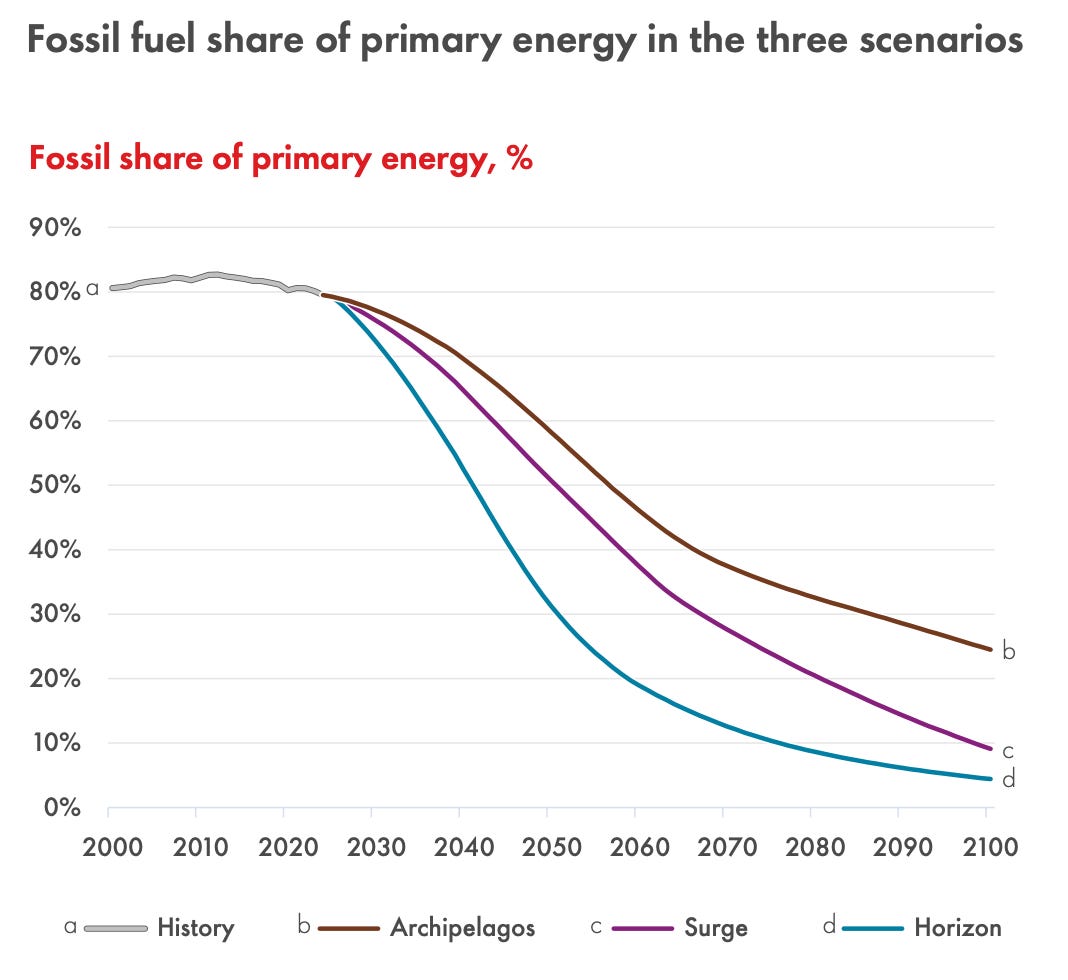
The chart above shows that even major oil and gas companies think a phase down of oil and gas will happen globally, but getting to near-zero oil and gas use is unlikely for the coming decades even in the most ambitious scenarios, via Shell 2026 Energy Scenarios.

The Climate Tech Map above outlines where more progress is needed to make clean alternatives to oil and gas the cheapest, most readily available option across all sectors of the economy.
Strategically, domestic oil and gas production will remain important for supporting our democratic allies abroad for the indefinite future. Shutting down U.S. oil and gas exports without commensurate reductions from our oil-producing adversaries risks disadvantaging the U.S. economy vis a vis illiberal petrostates, increasing the dependence of our allies on oil and gas from our adversaries, all while enriching oligarchs in ways that entrench their power. As the war in Iran and the lack of traction for a global fossil fuel non-profileration treaty shows, there are significant limits to U.S.’s (and our allies’) ability to stop oil supplies in autocratic petrostates. Maintaining the U.S.’s competitive edge in the global oil and gas market is thus critical, as we simultaneously embracing policies that help reduce the world’s demand for oil and gas to a fraction of today’s levels.
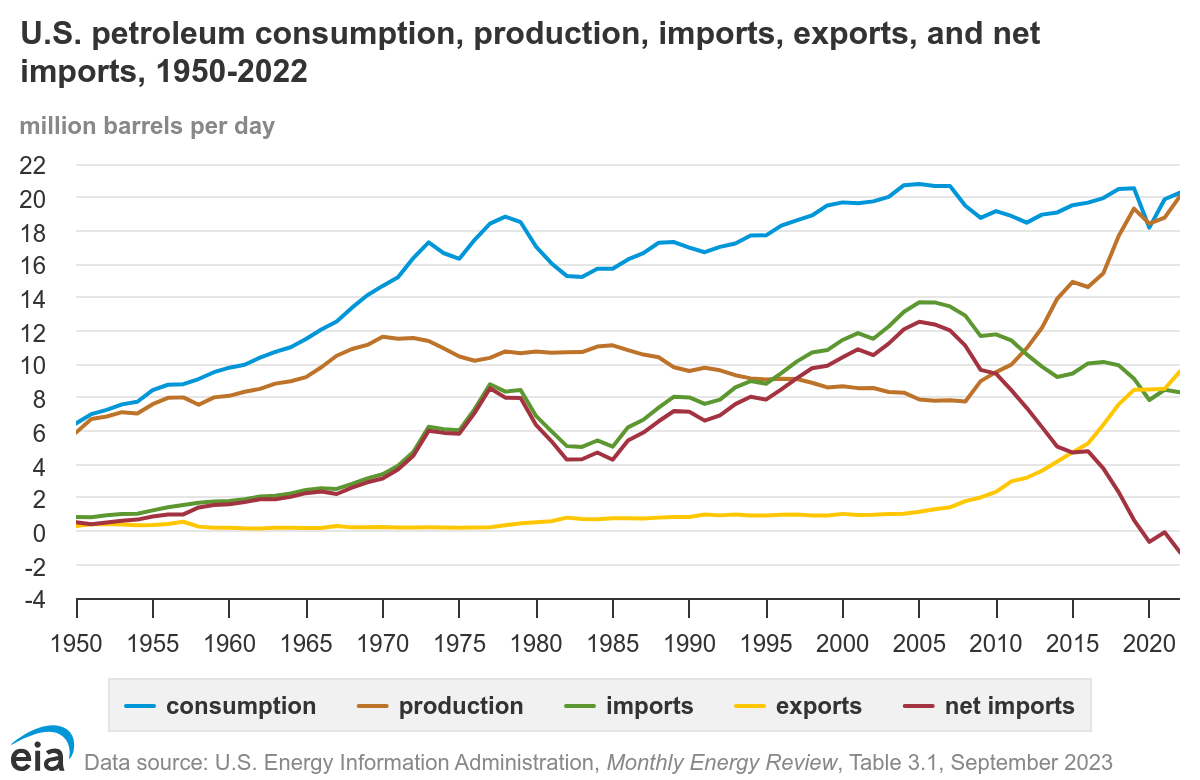
The chart above shows that the US is a major oil and gas exporter now, which is a critical tool for our global economic competitiveness and diplomatic strength, via U.S. Energy Information Administration (EIA)
Politically, oil and gas workers and communities are essential for building a broad and durable electoral coalition in support of climate action and the progressive policy agenda more broadly. Attacking the industry writ large in the name of climate villainy is a major turn off for the millions of workers and hundreds of communities across the U.S. that depend on jobs and tax revenues from the oil and gas supply chain today. Even in places like Bakersfield, CA, where a booming renewable energy industry is replacing a declining oil and gas industry, renewable jobs are not providing a one-to-one replacement for lost oil and gas jobs.
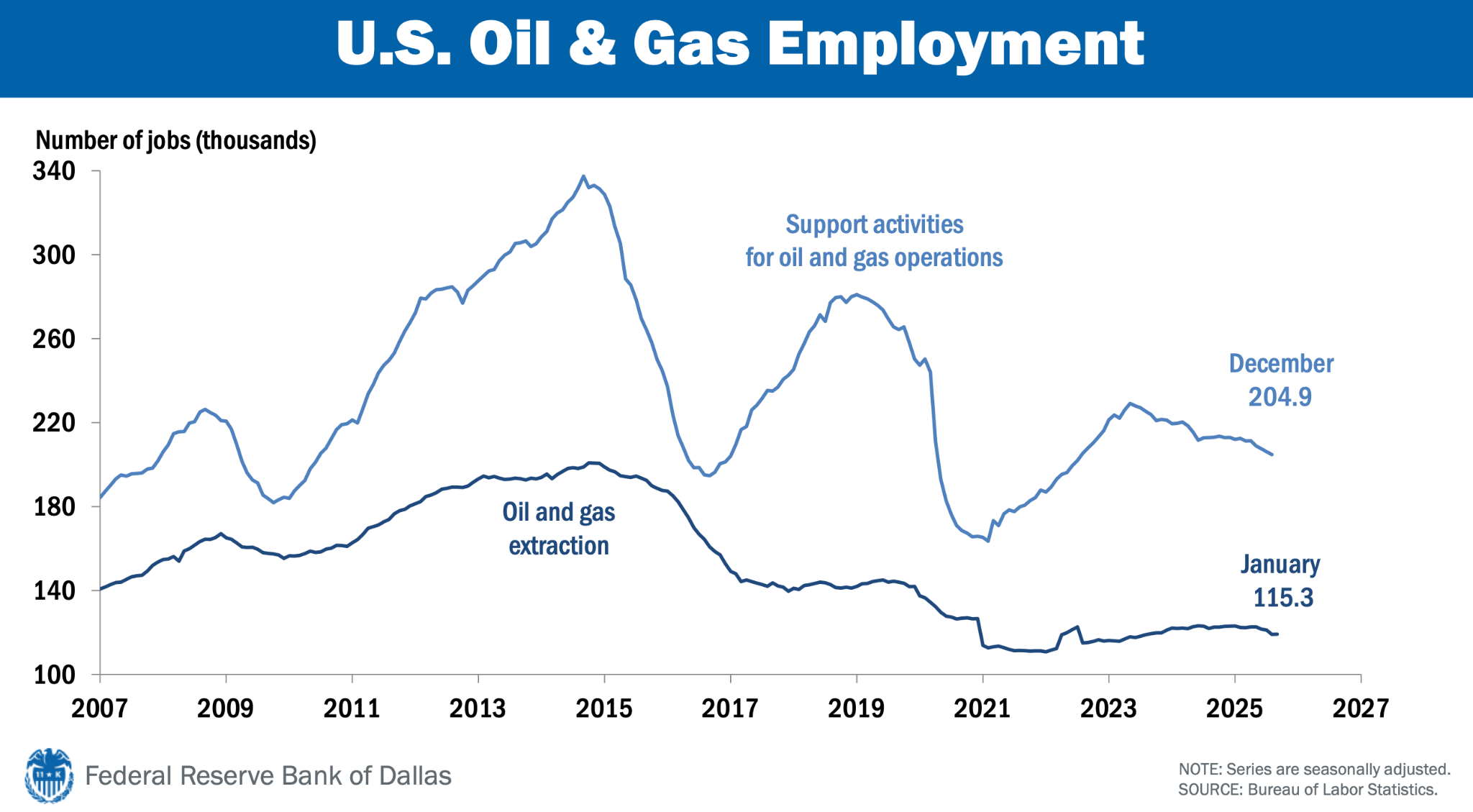
In the chart above, direct employment in the oil and gas industry is a small fraction of employment nationally, but a meaningful jobs engine in many rural communities across the US where other higher-paying jobs are more limited (via Dallas Fed).
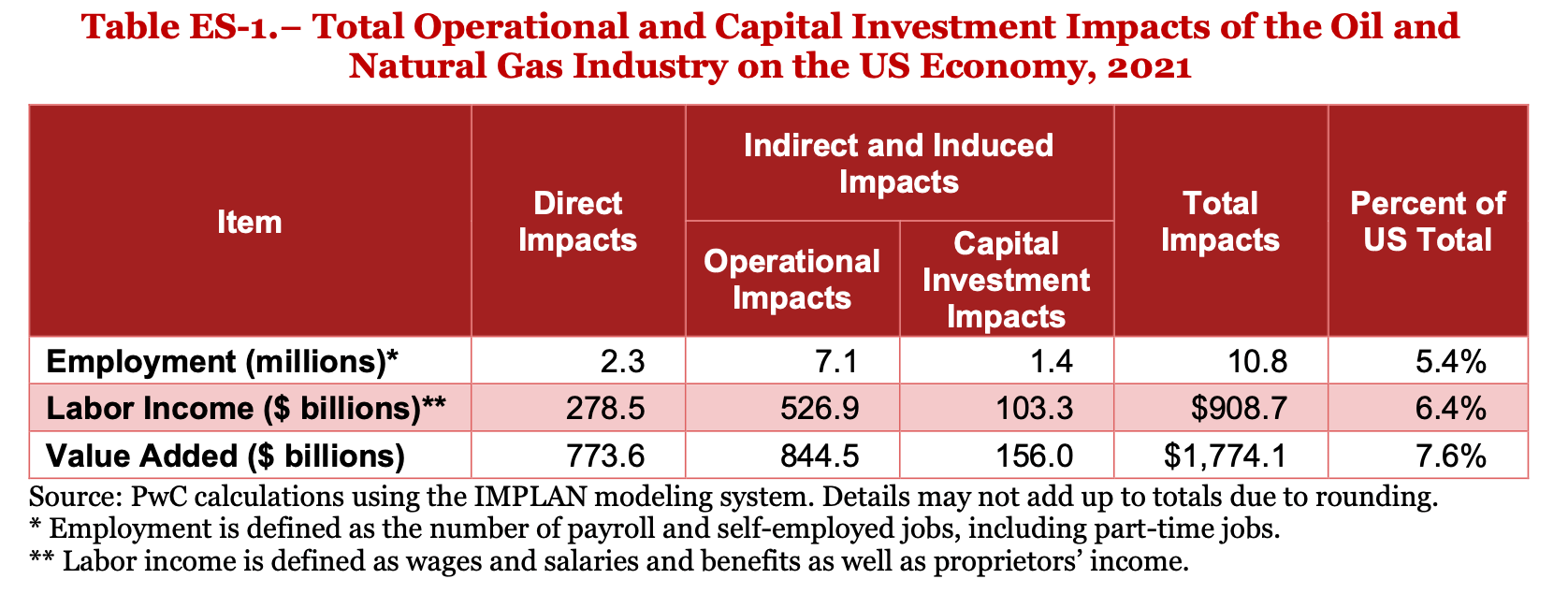
As seen in the above, indirect employment from oil and gas production is an order of magnitude greater than direct employment, via API
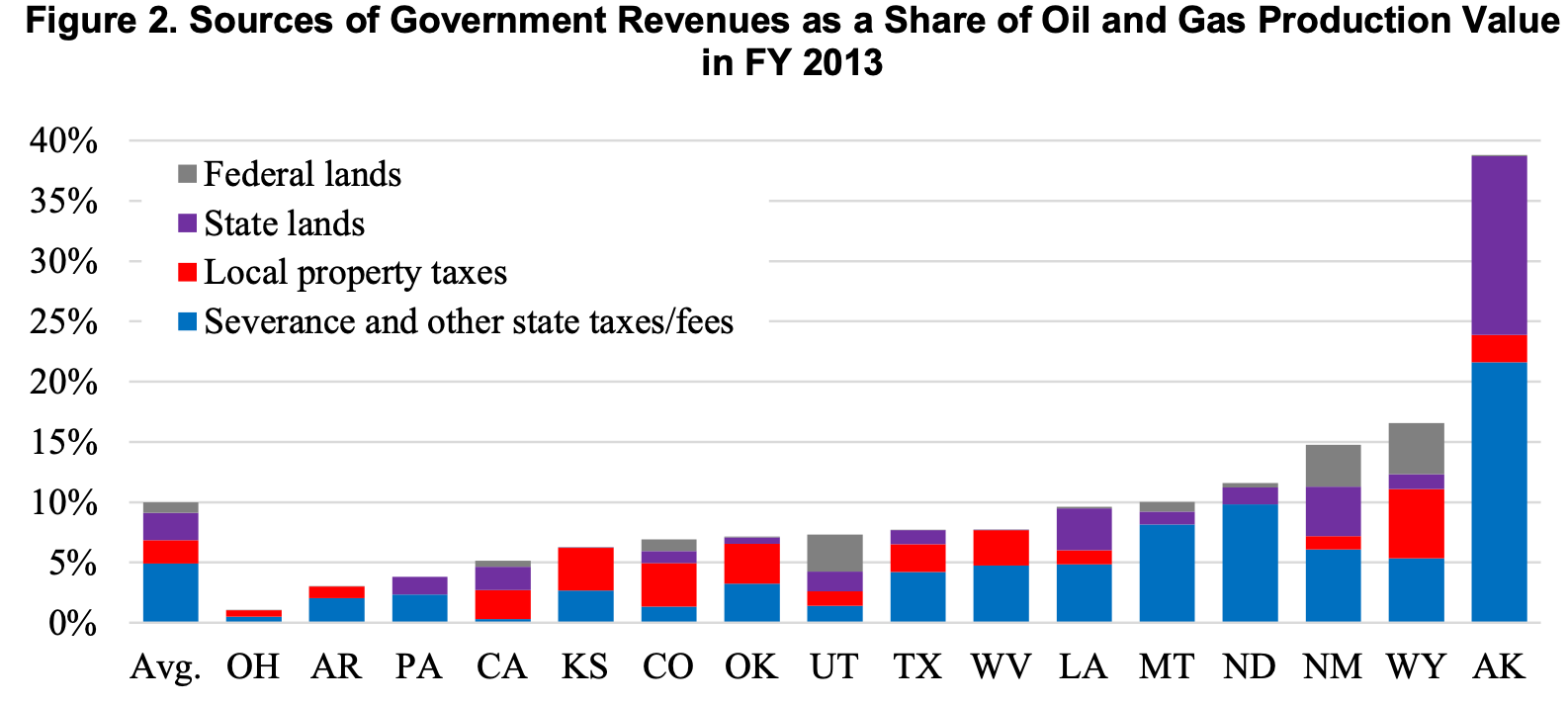
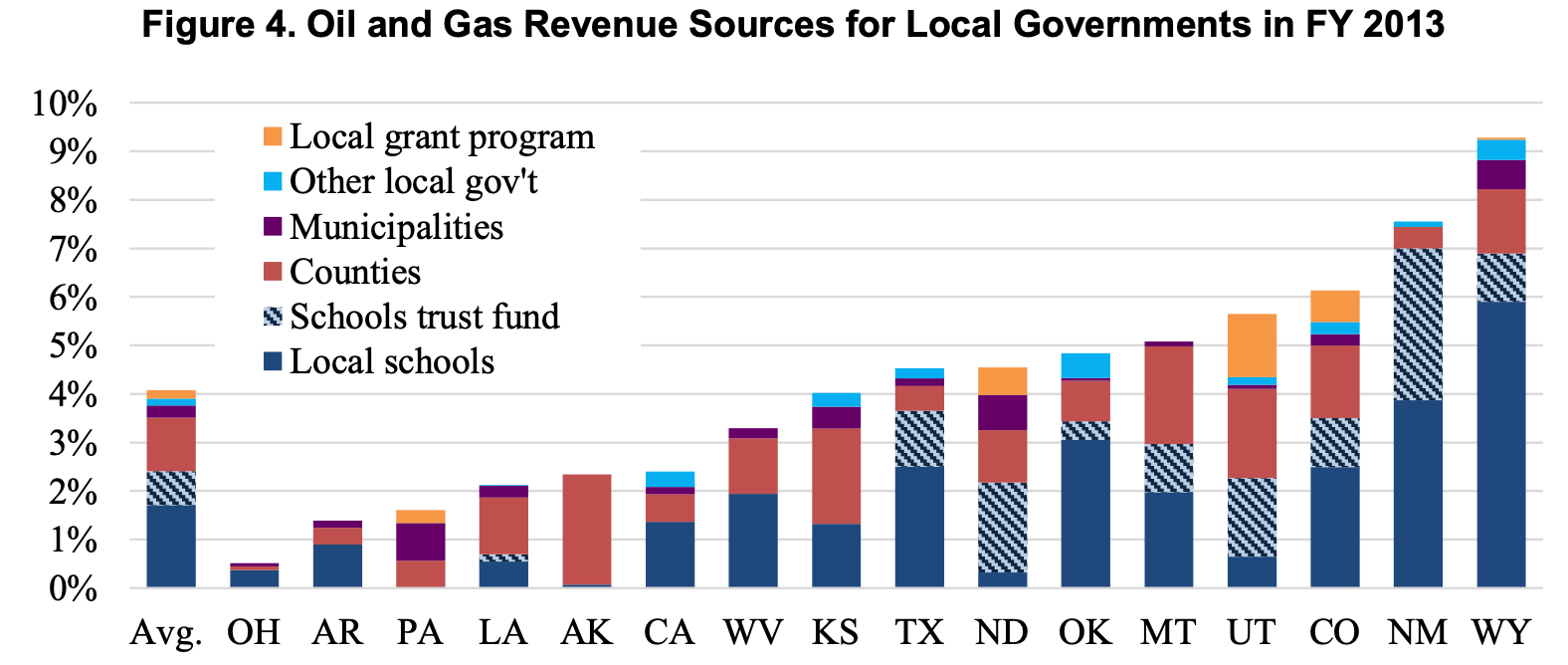
In the two charts above, it is clear that oil- and gas-related economic activity is a critical source of revenue for many state and local governments, via RFF
Oil and gas workers and fenceline community members that depend on oil and gas taxes to maintain social services may disdain fossil fuel executives as much — if not more — than climate advocates in coastal and/or urban centers. But painting these voters with the same broad brush as oil and gas executives and investors because they don’t want to shut down fossil fuel production rapidly risks alienating them and pushing them out of the progressive tent.
A huge challenge with blanket opposition to oil and gas from a messaging standpoint is that it is not a “sin” industry like tobacco, gambling, or social media. It is a utility that underpins our modern standard of living, not a luxury that we can easily afford to avoid. Consumers do not choose to use fossil fuels because they “enjoy” them; they choose to use them because it is the affordable option to keep the lights on, to heat their homes, and to drive to work or school. Messaging that frames fossil fuel use as a sin in the general public consciousness is bound to alienate voters that don’t have the financial ability to adopt clean alternatives today.
And while climate activists have tried hard to make climate mitigation as simple as possible (e.g. electrify everything, power the world with wind, water, solar, etc.), the inconvenient truth is it is actually quite complicated. An energy transition, like politics, is local. Trying to paint the path forward in broad brush strokes is not just suboptimal, but also likely quite alienating to voters that want to pursue a different decarbonization strategy than the climate activists that live far away would prefer.
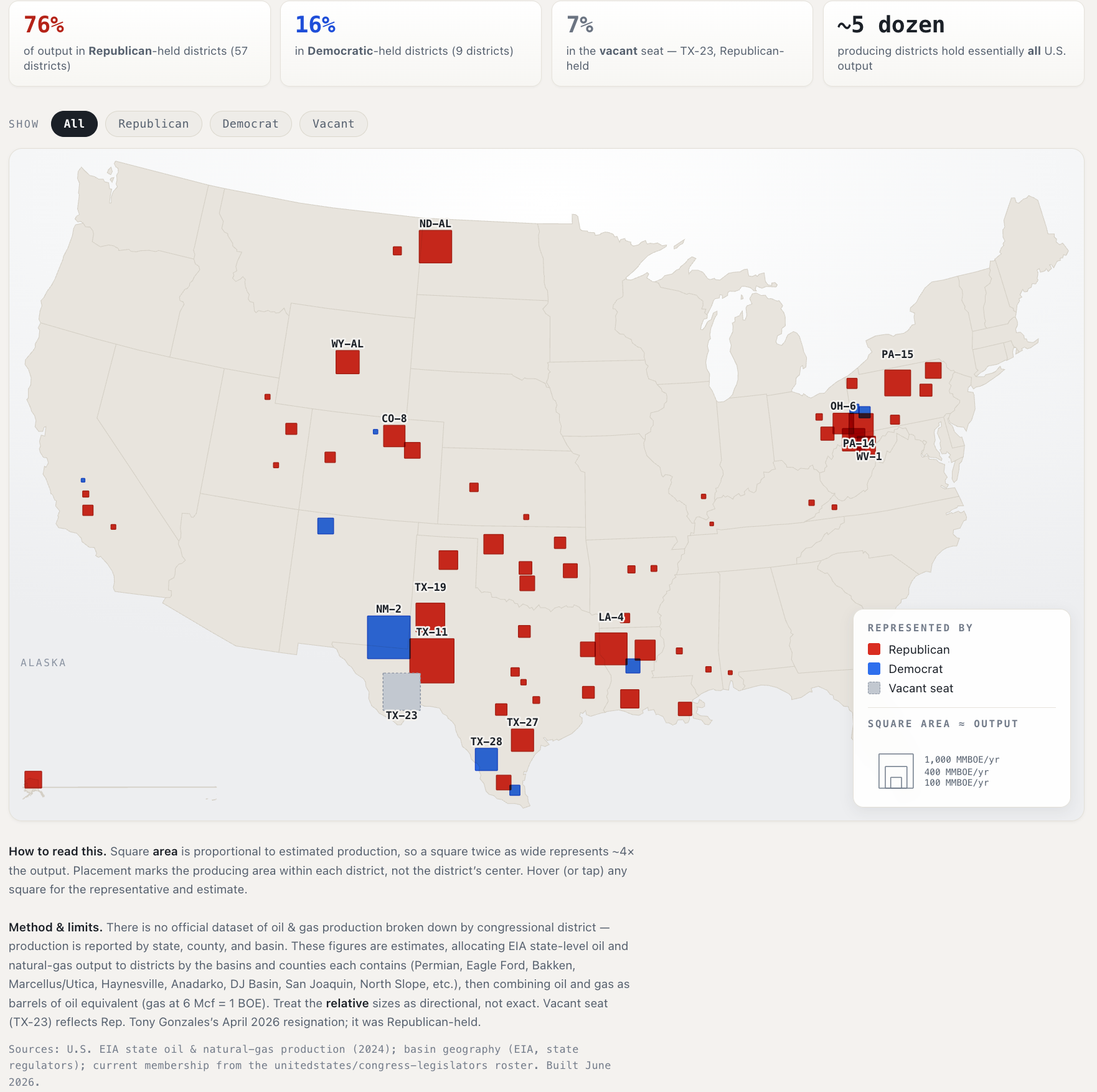
The failure of climate messaging in oil and gas communities is readily apparent in maps showing congressional representation in districts with large oil and gas production today. The progressive movement will have an extremely difficult time winning the purple-ish states necessary for durable majorities in Congress and the Presidency (such as PA, OH, CO, NM, AK, even TX and LA) without support from oil and gas producing areas.
Economically, blanket opposition to oil and gas use presents headwinds to affordability and economic prosperity for consumers and businesses nationally. There are many cases where renewables and electric alternatives are more expensive than even decarbonized oil and gas today without significant new subsidies (and/or where availability of finance and/or regulatory barriers makes clean alternatives inaccessible).
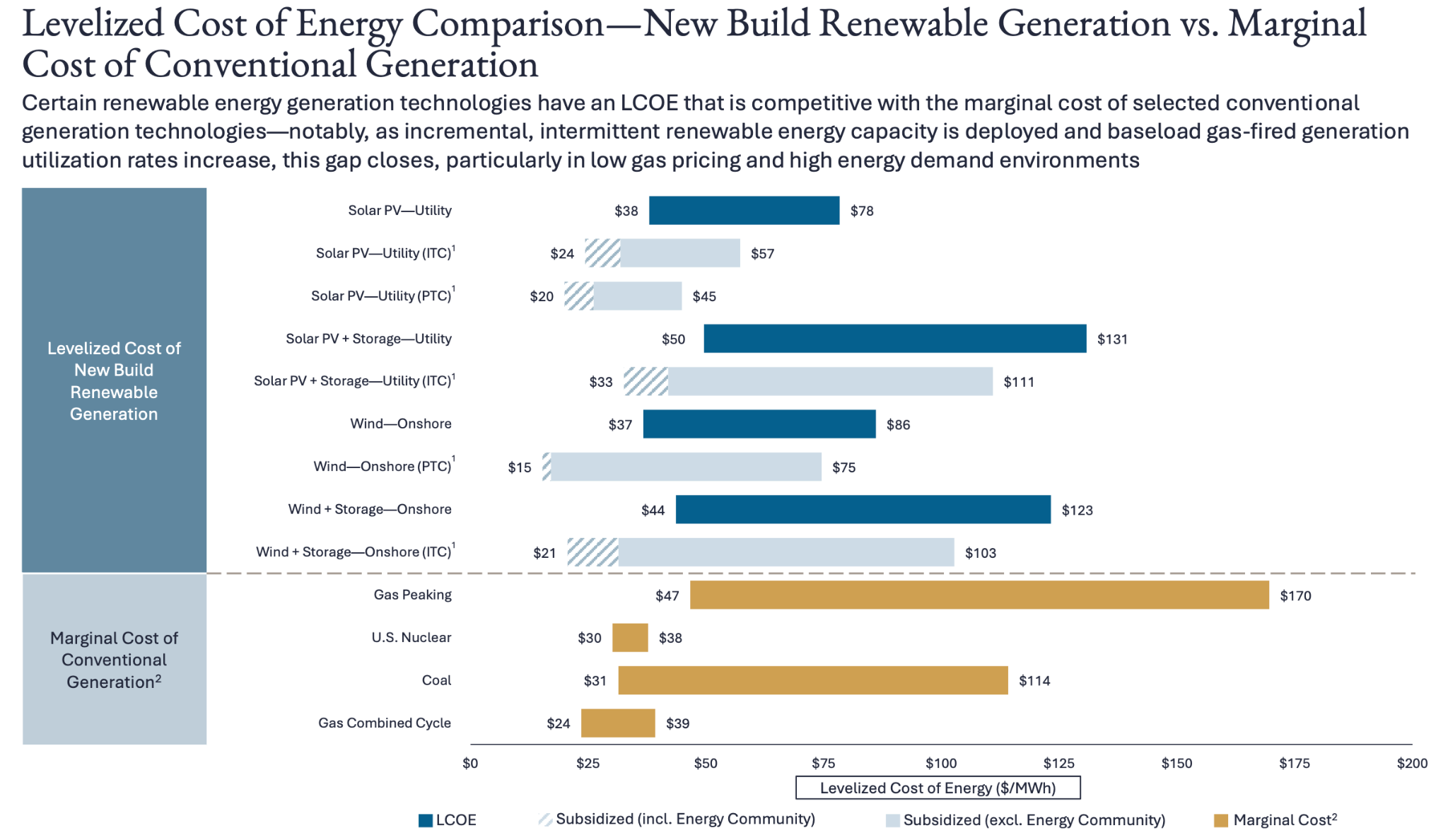
As seen in the chart above, renewables are cheaper than existing fossil fuels in some, but not all of the cases. Source: Lazard
Insisting on a very rapid pivot away from oil and gas use today will involve major price spikes and/or supply shortages for activities like aviation and shipping, in addition to raising prices meaningfully in sectors like surface transportation and power generation. We can and should offset these affordability challenges via public subsidies for clean alternatives, but our fiscal situation post-Trump tax cuts likely makes substantial increases to our national debt increasingly challenging. In short, the challenge of dogmatic opposition to oil and gas use is that it comes with real tradeoffs — this isn’t just the fossil fuel gaslighting us into maintaining business as usual operations.
Promises of future cost savings from clean alternatives to oil and gas do little to allay the real economic impacts of imposing transition costs on working families and businesses that create family-sustaining jobs in the coming years as clean alternatives scale. Progressives must grapple seriously with voters’ prioritization of economic competitiveness and affordability of basic necessities vis a vis their concerns about climate change if they want to win (super)majorities nationally. The stakes are also bigger than just climate policy: if climate is a headwind to the popularity of the progressive brand nationally, then the broader progressive economic and social agenda faces greater electoral hurdles.
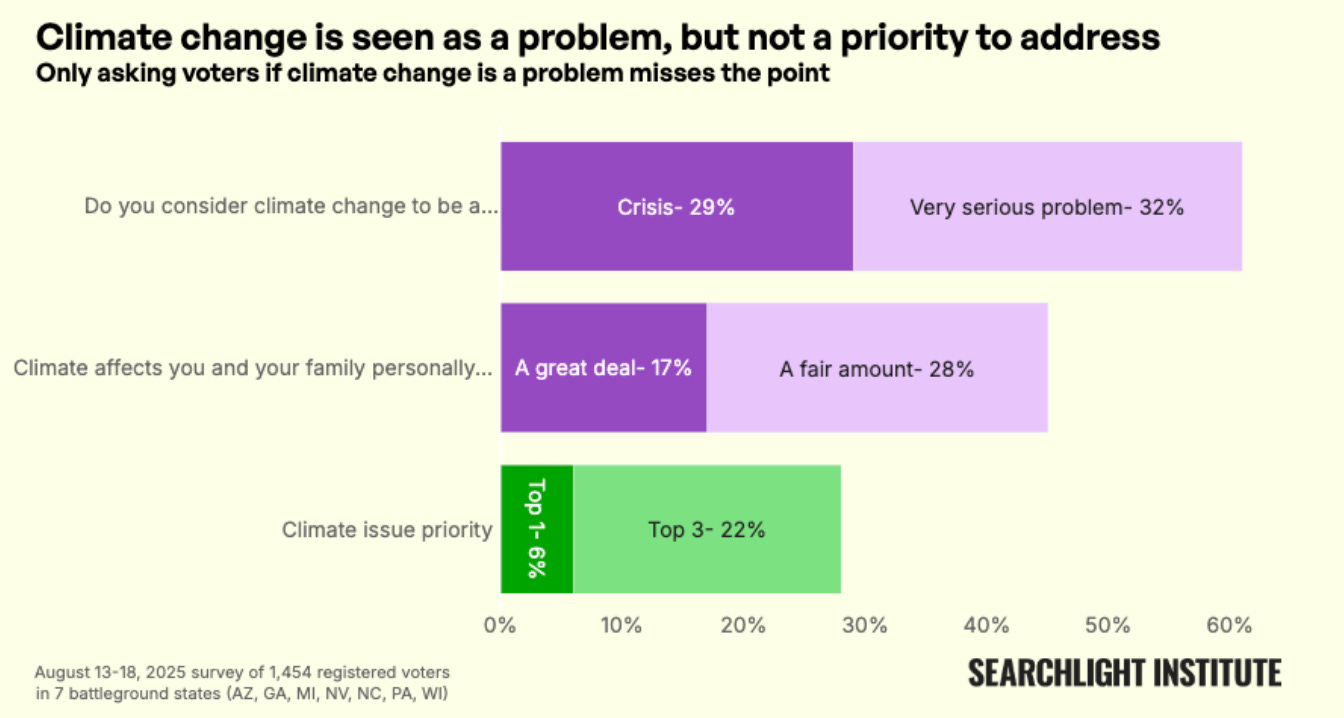
As seen in the polling above, U.S. voters think climate change is an important issue, just not an urgent priority given everything else they have on their plates today. Source: Searchlight
Chatper 3: A new progressive vision for responsible U.S. oil and gas
As an alternative to the “shut down the industry as fast as possible” frame today, progressives should embrace a vision for sustained American oil and gas that is produced and used responsibly. For oil and gas to be produced and used “responsibly” in the future, it should be:
Climate-forward: remaining oil and gas should be as low impact to the climate as possible. This means eliminating emissions associated with the full value chain of oil and gas production, refining/transportation, and end use via methane abatement, electrification, and carbon capture and storage.
Safe and clean: Oil and gas production should be safe for workers and communities, and clean for the environment in terms of local air and water pollution.
Equitable: profits from oil and gas use should be shared equitably with workers and communities, not just executives and shareholders.
Resilient: profits from oil and gas should be taxed to fund policies that buffer consumers from price and/or supply crises as the energy transition unfolds, and to reinvest in developing a diversified economy of the future in today’s oil and gas regions so that workers and state budgets to transition to new opportunities as oil and gas wanes.
The benefits from this new approach to oil and gas policy would be myriad. First, support for responsible oil and gas positions the U.S. — not illiberal petrostates — to be a global leader in this geopolitically important industry for the indefinite future. The U.S. is the world’s largest oil and gas producer, but it still accounts for only around 20% of total global production. It will be decades before global demand falls anywhere near this level, meaning that the U.S. can maintain or even grow its own oil and gas production if it adopts trade and diplomatic policies that reduce the production in other countries first. If, in parallel, the U.S. quickly ratchets down carbon intensity of our oil production to near-zero (which is very possible to do economically), then more U.S. production and less production abroad would result in a clear net-benefit for emissions reductions and overall climate mitigation efforts.
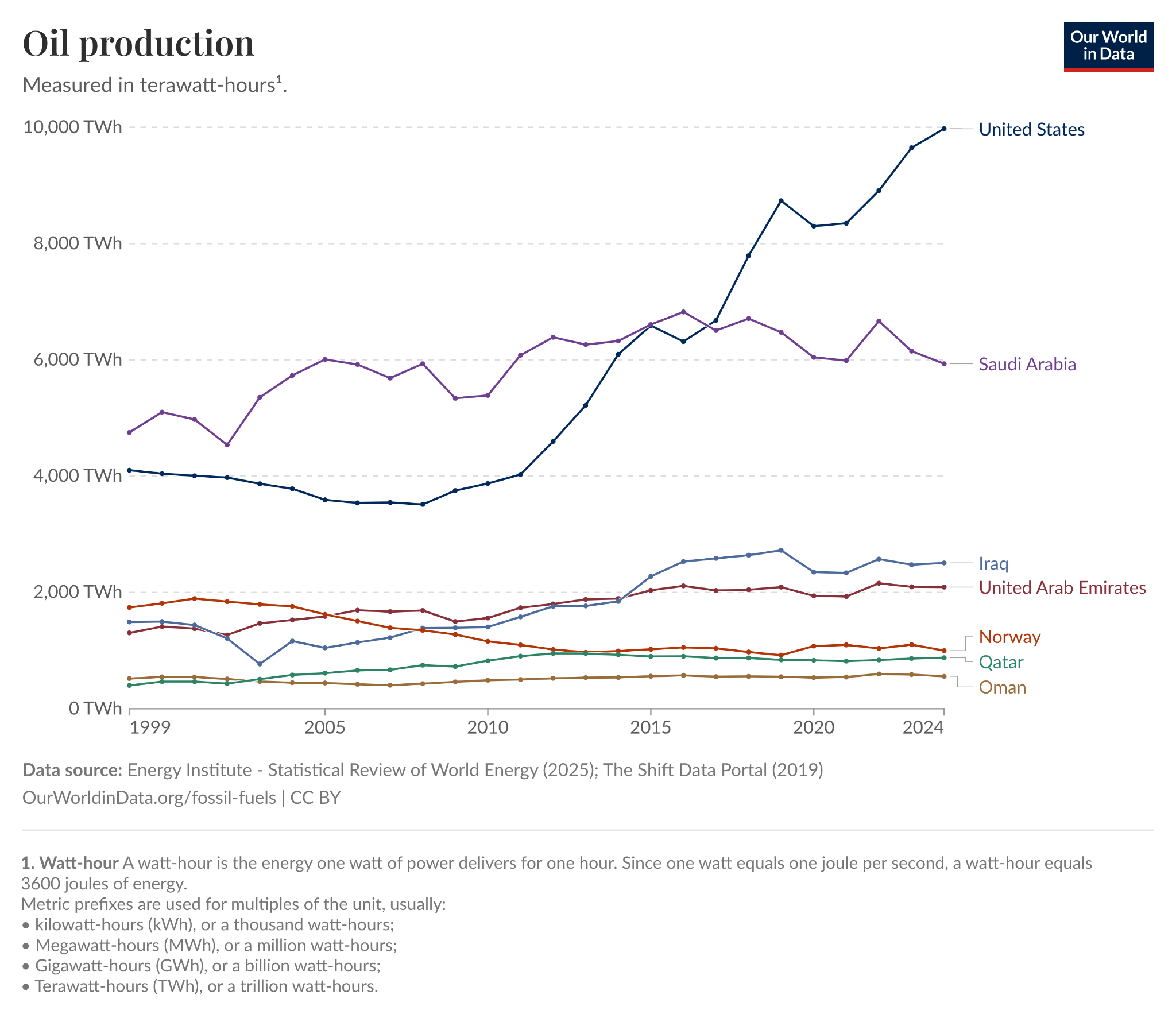
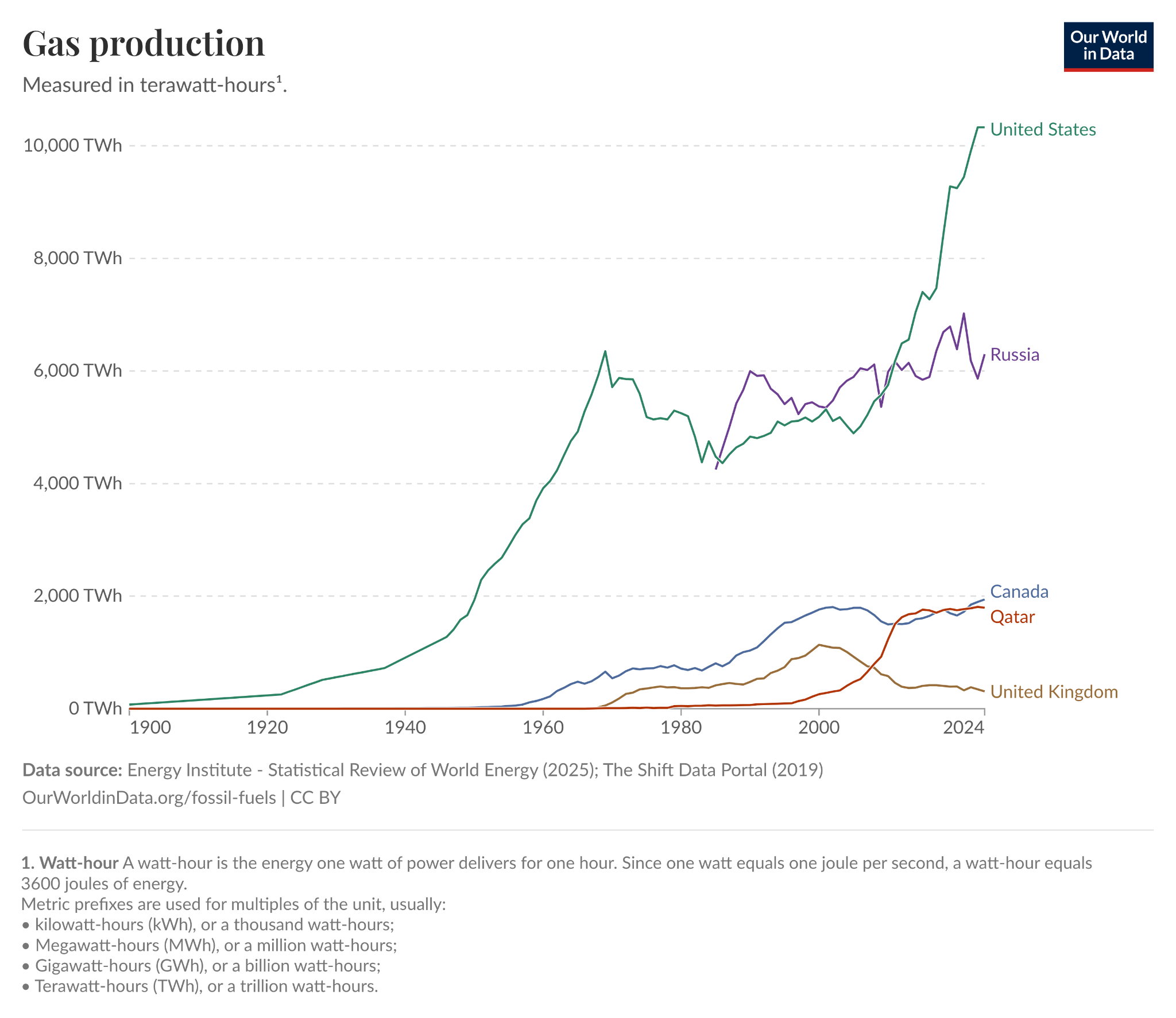
In the charts above, the U.S. is the world’s largest oil and gas producer. Source: Our World in Data.
Doing so will require that our vision for U.S. oil and gas production reorient around exports, so that we can prioritize clean energy scale up both at home and abroad as much as possible. The good news is that we’ve already started this transition, as the U.S. has recently become a net exporter of oil and has expanded our LNG export capacity dramatically over the past decade.
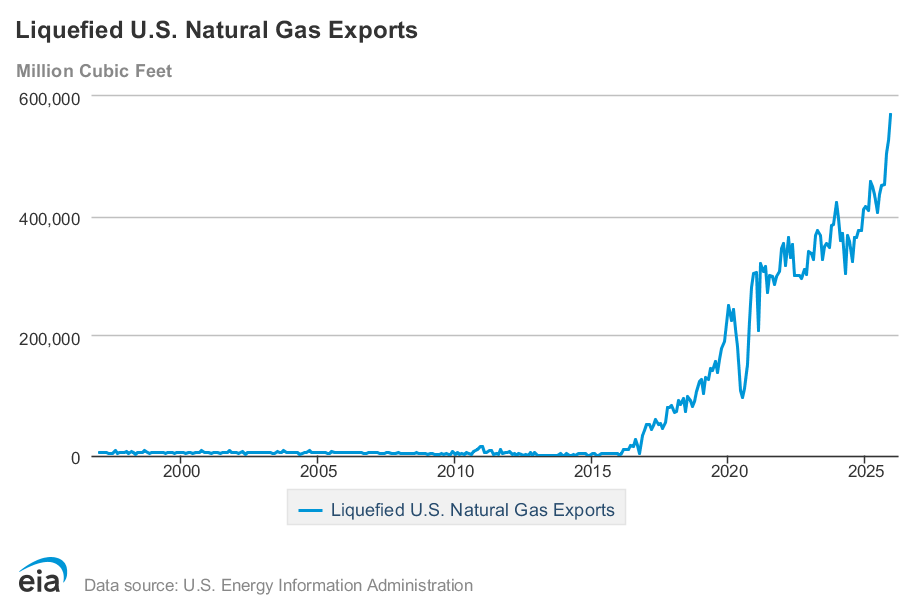
In the chart above, the U.S. exports of natural gas have rocketed upwards in the past decade. Source: EIA
Maintaining a leadership position in the global oil and gas industry into the future brings additional domestic benefits. For one, doing so will help sustain jobs and tax revenues for communities dependent on oil and gas today, extending the runway for these communities to transition to a new economic model consistent with the clean economy of the future. Relatedly, it will enable progressives to appeal better to voters in these districts by acknowledging the societal value in their work and helping them sustain their livelihoods and communities for decades to come, while providing revenues to help them diversify their economies more effectively. And it will also enable more economic resilience via domestic energy security by giving us more tools to mitigate any future price spikes and/or supply shortages in the future.
Next, given that we are going to use some amount of oil and gas over the coming decades, an embrace of “harm reduction” instead of “abstinence only” policy towards the industry will drive further economic, climate, workforce, and broader social benefits for the country as a whole and for oil and gas communities specifically. For oil and gas, harm reduction involves the embrace of a range of tools to decarbonize remaining domestic oil and gas production and use — the “diet soda” version of today’s oil and gas industry. In drilling and pipeline operations, efforts to control GHG emissions (primarily from methane) can actually be profitable for the industry, and is something that progressive environmentalists already embrace. Downstream, carbon capture and storage (and/or offsets using permanent carbon removal technologies) can reduce emissions to near zero with modest cost that is often significantly below the cost of other clean alternatives. I’ve written before about how a progressive approach to “carbon management” efforts that is based on industry mandates and decreasing taxpayer subsidies over time can fully complement — not compete against — a mobilization of capital for renewable and electric alternatives.
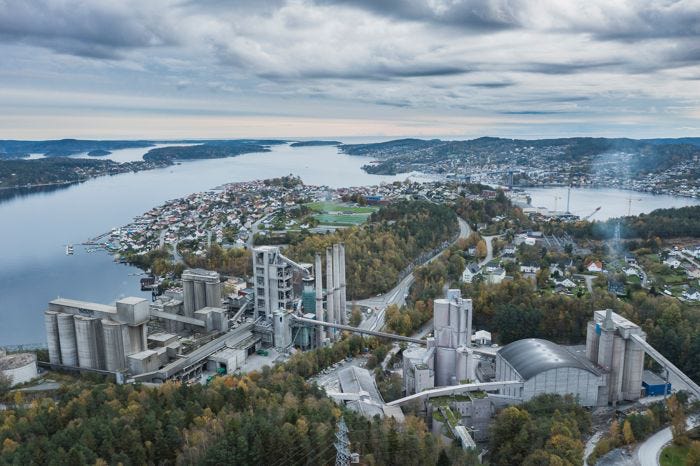
Pictured above, carbon capture and storage may be inefficient, but it is commercially mature at affordable prices now for many “hard to abate” sources of emissions with no good zero-carbon alternative, as the Brevik CCS project at a cement kiln in Norway shows.
Harm reduction in oil and gas also involves more robust environmental, health, and safety regulations for the industry. Implementing such regulations will bring additional benefits to many communities in the Gulf Coast and in neighborhoods in major metropolitan areas that have faced some of the worst environmental justice impacts from the oil and gas industry to date. A fulsome regulatory state capable of tracking and penalizing air and water pollution will provide incentives for the largest asset owners to establish stronger safety and environmental compliance cultures — much like Exxon did post Valdez disaster and Koch Industries refinery business did as it grew.
The counterintuitive theory behind this new approach is the progressives can both keep U.S. oil and gas production high and reduce emissions dramatically via an accelerated energy transition, both domestically and abroad. As discussed in detail later, such a pivot offers a path to change the adversarial nature of the relationship between climate and industry actors in a number of key dimensions, which could enable long overdue breakthroughs in climate policy in the near future. But first…
Chatper 4: A progressive policy platform for responsible U.S. oil and gas
To articulate this new vision for oil and gas, progressives can advance a policy agenda for oil and gas that has three key prongs:
First, regulation and public funding are important to decarbonize and clean up the existing industry. Methane fees, clean air and water regulations, post-closure well clean up funds, and tax credits for carbon capture and storage can create a policy package that jumpstarts investment in decarbonization today. The key challenge for progressives will be how they allocate responsibility for paying to clean up this pollution. Subsidies for cleaning up the industry are likely key to get early industry buy-in and to protect consumers from increases in prices of oil and gas (and associated finished goods), but it will be imperative for progressive to push a greater share of the burden onto industry via regulatory requirements over time.
Second, trade measures like tariffs and export promotion activities are needed to encourage low-carbon oil and gas use globally. Because the U.S. is not the lowest-cost producer of oil and gas, the best way for the U.S. to sustain production in a declining oil and gas global market is by embracing low-carbon trade policy. The U.S. can be one of the lowest cost low-carbon oil and gas producers. U.S. oil and gas exports will be beneficial for global emissions reductions as long as trade policies are in place to hasten the decline of dirtier production around the world (ideally in geopolitically strategic locations like Russia, Iran, and beyond). Such trade measures can keep U.S. production and profits high, which will be important for distributing the benefits of domestic oil and gas production broadly.
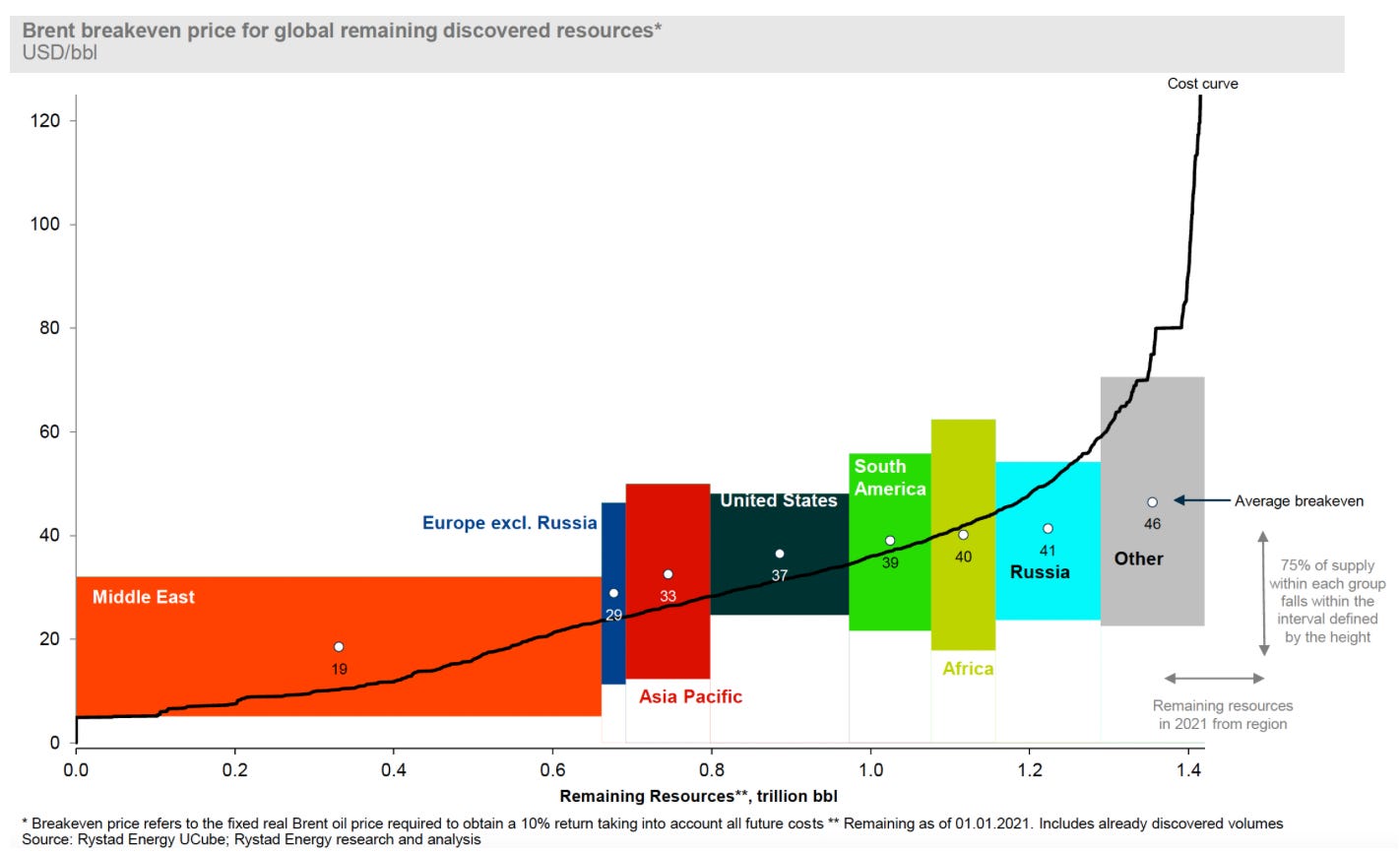
The U.S. is a middle-cost supplier of oil and gas… Source: Oil and Gas Assets at Risk: How Will Clean Energy’s Rise Impact…
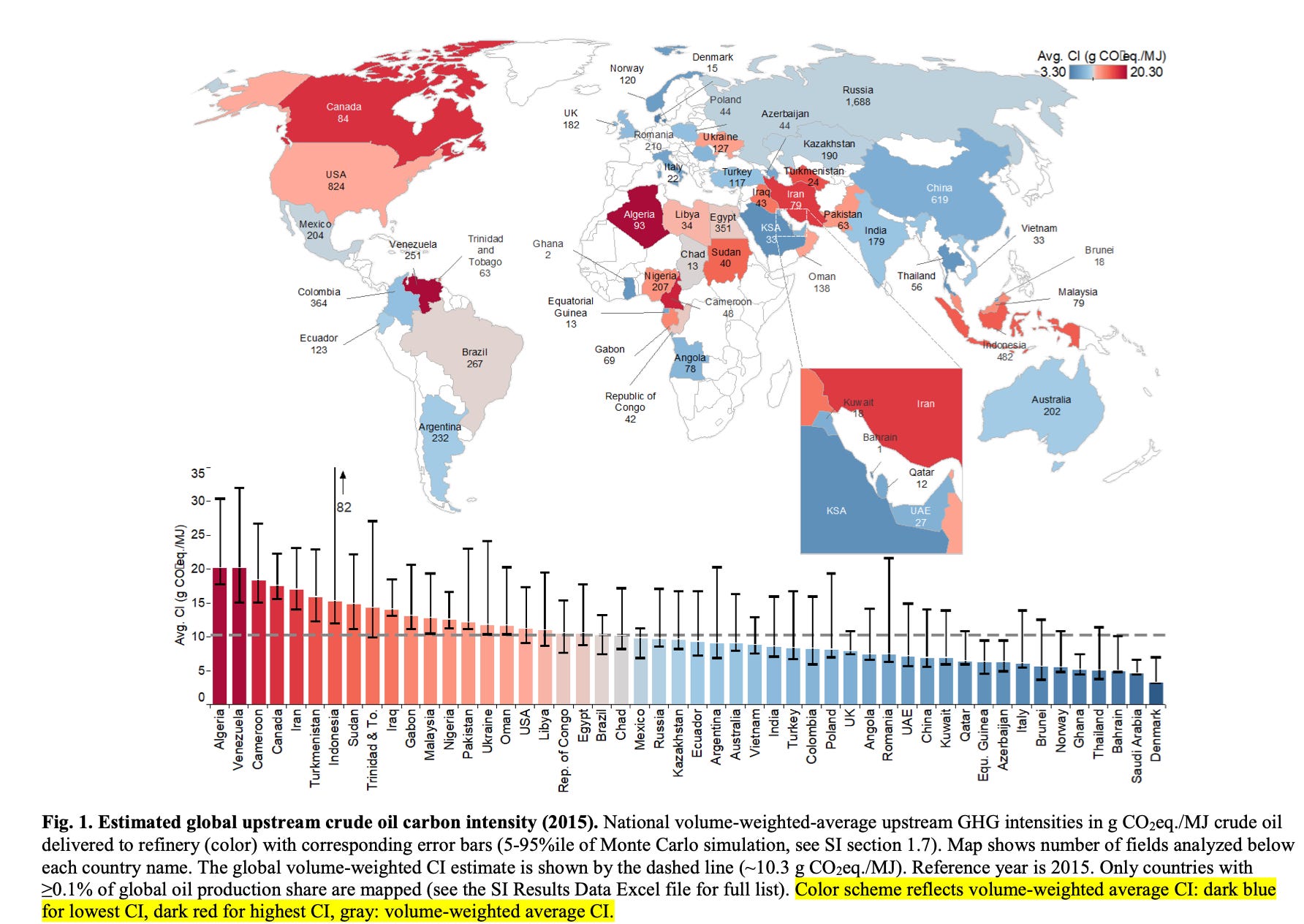
…and the U.S. is a middle of the pack carbon-intensity producer. Averages of U.S. oil and gas carbon intensity of production, however, obscure a very large variance in production domestically — we have some of the cleanest, and some of the dirtiest production around. Source: Masnadi et. al
Third, taxation of oil and gas profits today is critical for reinvesting in oil and gas communities for a clean energy future. Without a clear strategy to invest in regional economic development beyond oil and gas, many communities risk the same fate as Appalachian coal regions, with dire social consequences felt primarily by working families. Trust funds capitalized by profits from the industry can help finance the future today without harming workers, state and local budgets, and the national debt. Taxes on oil and gas profits can also be used to support efforts aimed at reducing price spikes and/or supply shortages as the energy transition unfolds via mechanisms like the Strategic Petroleum Reserve.
For this three-pronged strategy to succeed in line with progressive values, it must operate in parallel with an even more aggressive policy agenda to accelerate the scale up of a clean energy-powered economy of the future. Publicly subsidizing a fulsome portfolio of clean energy innovation, financing early commercial deployments of promising clean technologies, modernizing the power grid, scaling EV charging infrastructure, and incentivizing the adoption of electric alternatives to oil and gas in buildings and vehicles are important to promote affordability, public health, and environmental protection today and into the future. Getting U.S. consumers and businesses off oil and gas as quickly as possible for lower-cost alternatives is entirely consistent with and complementary to a strategy of sustained (but decarbonized) oil and gas production aimed largely for export. Oil and gas and GHG-emission free alternatives can and should be partners for the indefinite future, not adversaries.
It is also worth noting what this policy platform is not, notably: blocking U.S. oil and gas efforts on climate grounds. This platform will allow permitting of new oil and gas infrastructure, allow new oil and gas leasing on federal land, and encourage exports of oil and gas on climate grounds. This isn’t to say we should have a blanket policy of approving new infrastructure without regard to local environmental impacts. We should not permit lots of new oil and gas infrastructure in ecologically sensitive areas, for example. But we shouldn’t use climate as the reason to say “no” for new fossil production consistent as long as industry follows responsible principles.
Chapter 5: A state-level case study of pro-climate, pro-oil and gas policy in New Mexico
New Mexico offers a state-level model for how progressives can update their approach to oil and gas policy nationally. One of the lone blue squares on the oil and gas congressional map is New Mexico’s 2nd district, represented by Democrat Gabe Vasquez which encompasses the Permian Basin oil and gas fields. New Mexico, which produces the second most oil in the country because of the Permian, has several sovereign wealth funds supported heavily by oil and gas taxes, which help fund social services like early childhood education and care. New Mexico also has an ambitious methane waste reduction regulation, as well as a net-zero 2050 legislative mandate, showing that oil and gas production can co-exist with strong climate action.
New Mexico isn’t alone in pursuing this approach. Norway operates their oil and gas industry in a very similar way. And many conservative U.S. states have adopted portions of this model (e.g. states like Alaska, North Dakota, and Wyoming have large sovereign wealth funds funded via fossil fuel taxes), showing that it can have broad appeal.
It is also worth noting that this vision is essentially a modern adaptation of the progressive approach to U.S. oil and gas policy from generations past. Hear Jesse Jackson on the campaign trail in 1988, in what is a creepily prescient take on our current oil and gas situation:
It does not make sense to be escorting all our tankers up and down the Persian Gulf paying $2.50 for every $1 worth of oil we bring out, while oil wells are capped in Texas, Oklahoma and Louisiana. I just want to make sense.
Chapter 6: The path forward
Progressives can use the success of the New Mexico model as an opportunity to evolve their strategy and rhetoric with respect to oil and gas, and to build a new compact for a clean and competitive U.S. oil and gas industry of the future. Progressives can unite climate advocates, labor, community groups, and the largest oil and gas companies to build a vision beyond “keep it in the ground” that supports a thriving U.S. oil and gas industry that serves all of America for as long as it takes to wean the global economy off oil and gas. The compact should empower communities and consumers dependent on oil and gas today to begin diversifying in a meaningful way now, so that as the industry wanes over the coming decades, the eventual and inevitable transition is experienced as increased prosperity, not economic shock.
Adopting this new path forward on oil and gas won’t be easy. Climate, labor, and community advocates will need to ensure that incentives remain strong for the industry to not try and pull a bait and switch when it comes to the “responsible” end of the “more oil and gas” bargain.
There is also an element of “fool me twice” when it comes to trying to unite the oil and gas industry with the broader climate and progressive tent. But there are several reasons why the current strategic calculus for the oil and gas industry is different today.
For one, the largest oil and gas companies have significant incentives to cooperate with this new approach because it would give them greater certainty around growing market share while protecting margins than the current policy environment, which vacillates unpredictably between “drill, baby, drill” and “keep it in the ground.” The world is transitioning to clean energy, with Asia leading the way at a faster pace than most analysts predicted even a decade ago. Oil and gas companies recognize that they are closer to the music stopping on their industry than in the past, and they are more open to hedging against a faster than expected decline in demand.
In addition, oil and gas companies have started to make more meaningful investments in decarbonization than in generations past. Oil and gas companies are clear that they won’t become renewables/biofuels companies like some thought about a generation ago. But companies like Occidental are already well on their way to becoming “carbon management” companies. And U.S. oil and gas leaders like Exxon and EQT have set ambitious methane abatement goals for their operations, showing the potential for larger cooperation if oil and gas companies are able to decarbonize in ways that are more consistent with their current business model and core capabilities. We need carbon management companies alongside renewable and electrification companies; encouraging this transition can help build a bigger tent of advocates for overall climate policy (or at least remove opponents…).
Nevertheless, progressives should take steps to make collaboration with the oil and gas industry more trustless going forward. To do so, progressives should insist on the equivalent of “automatic stabilizers” that show the industry’s commitment to this new strategy. Disclosing industry’s rate of investment in decarbonization technologies, amounts of donations to political candidates and parties, and other key worker, environmental compliance, and community benefit metrics should be table stakes for industry to work in good faith as part of a broader pro-climate, pro-oil and gas U.S. advocacy coalition.
If oil and gas is not willing to uphold its end of the bargain, progressives can pursue more combative strategies to encourage cooperation. I think we are not yet at the place where we need to threaten nationalizing the industry like the Roosevelt Institute has proposed. But we should be building out policy proposals and advancing litigation strategies that involve clear sticks — not just carrots — for industry to maintain cooperation on oil and gas decarbonization across administrations.
In conclusion, now is the time to hope for the best, but plan for the worst when it comes to our oil and gas industry. For too long, progressives have only planned for the worst, not envisioned what “best” really looks like in the eyes of Americans most dependent on oil and gas today. If we did, I think we would find that “best” looks like a growing American oil and gas industry, regulated strongly to ensure equity and environmental outcomes, taxed progressively to support a clean energy transition, and executed in parallel to incentives that accelerate the emergence of a clean economy of the future. And planning for the worst, progressives should insist on “trustless” cooperation from industry to ensure they uphold their end of the bargain.
It won’t be easy to do, but if the progressive community can commit to this pivot, they just might be able to pull off the seemingly impossible task of bringing together oil and gas alongside climate champions to create a durable climate policy framework for a clean economy of the future that enables broad prosperity for all Americans.
This is a careful approach to a difficult topic. I praise your fortitude!
I think that everyone who wants to avoid the worst impacts of climate change has to acknowledge that reducing U.S. oil *demand* is the primary goal. In a global oil market, if we reduce our supply it will be met from another source. "Keep it in the ground" is a great goal for Saudi Arabia, but I don't think they are going to comply.
This means that a plan for declining oil use needs to be created by government(s). Unfortunately the economists favorite approach, a carbon tax, will simply move that cost to consumers. Oil companies are remarkably good at that, and there is every reason to believe they would actually increase their profits as they have in every oil crisis to date. Similarly, reducing U.S. production sends U.S. dollars to Saudi Arabia, which I don't think is a great outcome either. So how do we reduce U.S. demand without impacting the most vulnerable oil users, who are low-income commuters with no other option?
Using revenues from oil production to subsidize the transition seems like it should be a first step. Sovereign wealth funds are a remarkable way to ensure a good future for everyone. It is incredible to me that California does not have one.
But if we don't want to gradually increase the price of petroleum products and create impacts on the poorest Americans, we are left making it feasible for them to electrify. This means reasonable electricity prices and much stronger efforts to ensure everyone can charge at work or at home.
Mandatory charging capacity in rental units is a great start, especially since rent control mechanisms suggest that can be done without increasing the rental cost (a technique that we have no existing experience with in gasoline prices, and so are very unlikely to work there). Next is workplace charging, which has fantastic benefits for the grid since it uses excess daytime renewable electricity. Electricity prices are low in a lot of the country, but more importantly they are much more stable than oil prices. Electric cars that you can easily charge would be good for most people.
Given the incredible entrenchment of oil in our legal and economic systems, the only approach that is fast and realistic is to reduce demand. That starts with cars, and cars start with charging for everyone.