
The U.S. has an unabated natural gas power plant problem. While renewables represent the majority of new planned capacity additions to the grid, we are still planning to build hundreds of GWs of new natural gas power capacity. Only Google’s Project Broadwing facility in Illinois has firm plans to include carbon capture and storage (CCS) technology. Unless something changes, these new unabated natural gas power plants will result in 100Mts of CO2 emissions over their lifetimes.
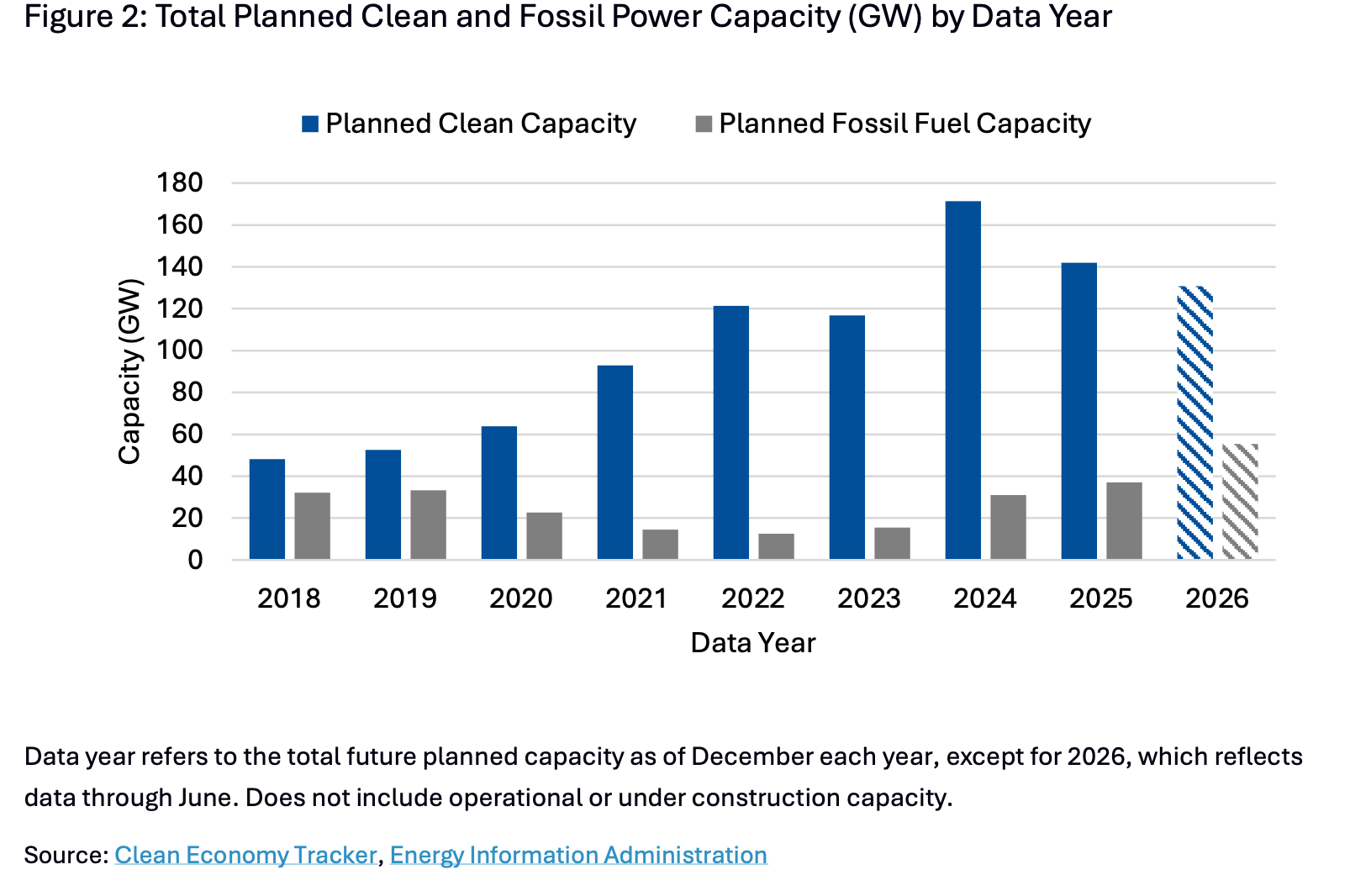
Source: EDF
These new unabated natural gas power plants should be completely unacceptable to our society given three things:
We know the emissions from these facilities are inconsistent with climate goals;
We have the technology to build 100% clean, reliable power via some combination of more renewables/batteries, clean firm alternatives like geothermal and nuclear, and natural gas with CCS; and
We have money and policy tools available to us to make 100% clean, reliable power affordable for customers without ballooning our national debt.
Yet the policy conversation in D.C. today seems resigned to partial solutions to the problem of new unabated natural gas power plants. Affordability is much more salient than climate in voters’ minds right now, making any policy that increases power prices politically toxic. And the climate denialism of the current Administration and Congressional leadership compounds this challenge by pretending that the new unabated natural gas power problem is not actually a problem.
As a result, basically all of the usual tools for tackling this problem decisively are unavailable, even in a new Congress in 2027 whose leadership is likely to be much more sanguine about the reality of the climate problem. Carbon pricing via taxes or emissions trading schemes is seen as dead on arrival. The sentiment is mixed on the value of more tax credits for clean power, especially as interest rates and deficits rise. And given that the path to supermajorities in 2029 runs through fossil fuel states like Texas and Alaska, proposals for direct regulations/taxes on natural gas power look increasingly unlikely to achieve critical mass.
Permitting reform, the lone bright spot in Congress today, will likely only tip the scales somewhat in favor of renewables vis a vis unabated natural gas power. The same is true for the combination of ideas proposed in the Thriving Economy Project’s menu of legislative options for the next Congress to support the build out of clean, affordable, and reliable power.
But there are still options left that could decisively solve our new unabated natural gas power problem in a politically feasible and durable way today. In particular, one federal policy option stands out: a clean electricity standard paired with an increased 45Q tax credit for all new power generation.
If Congress passed a law that made, say, 90kg CO2e/MWh the ceiling for GHG emissions from new power generation (i.e. roughly 80% lower emissions than a new unabated natural gas combined cycle today), it would ensure that all new natural gas power generation included CCS and/or that developers built other clean alternatives instead of natural gas (all while incentivizing the no-regrets strategy of upstream methane abatement in oil and gas production). Our unabated natural gas power plant problem would disappear overnight.
In its place, an acceleration in renewable power deployments coupled with a small (but still meaningful) increase in natural gas power CCS projects would follow. Renewables are close behind unabated natural gas power plants in most geographies where they aren’t already the economic option today.
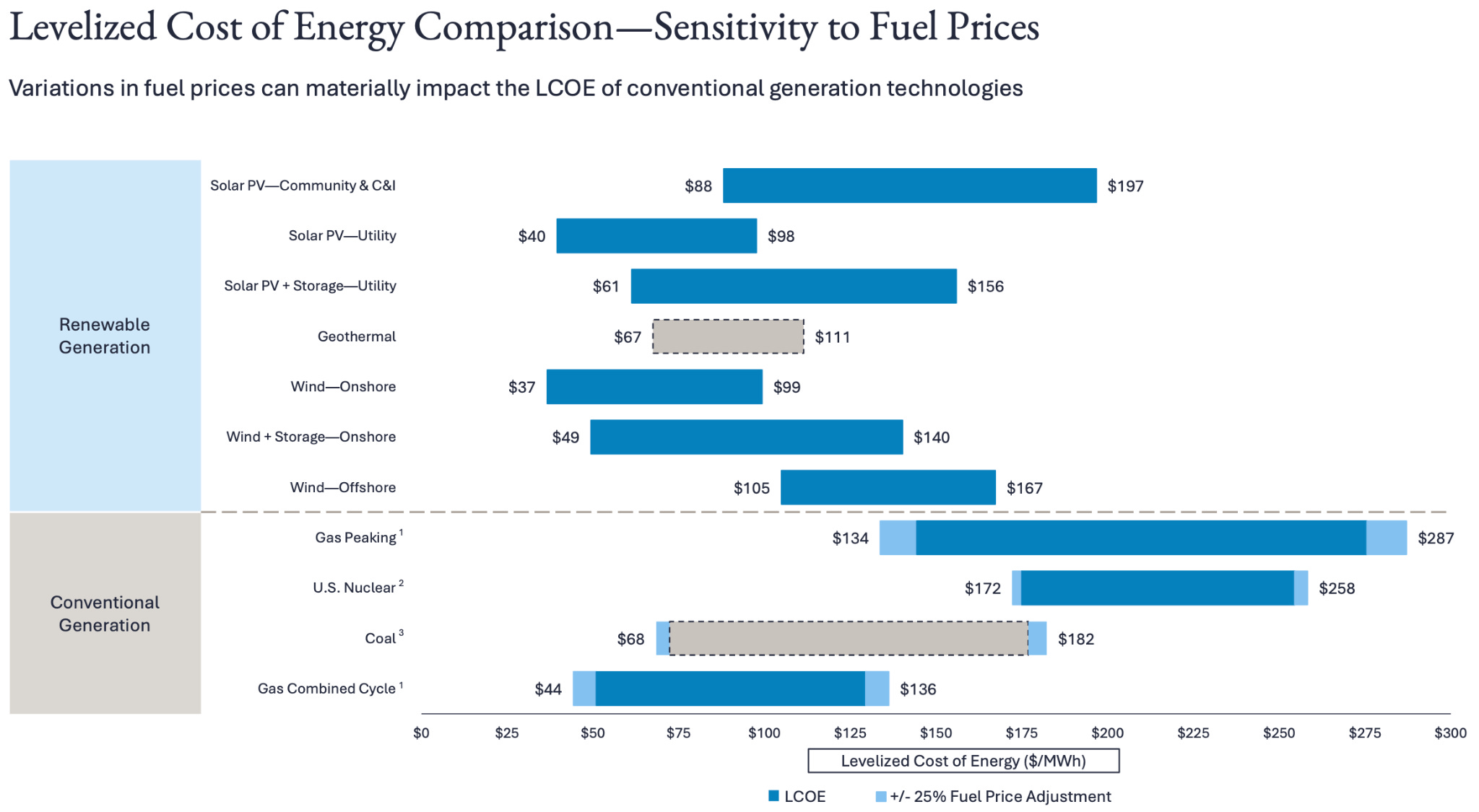
Making unabated natural gas power plants compete on a level carbon playing field by requiring them to install CCS will tip the scales significantly in the direction of renewables. A recent report from Relae (nee Carbon Direct) found that carbon capture and storage increased the cost of new natural gas power generation in the U.S. between 50-100% today (which is after the $85/ton federal 45Q tax credit).
Incumbent industry, however, will be quite displeased with what a standalone clean power standard would portend for their profitability. As a result, they will almost certainly fight any proposals for a standalone clean power standard, citing the fact that such a policy will raise power prices for consumers and/or that CCS is infeasible at the necessary scale/timeframe. In fact, this is precisely what the electric power trade association did when the Biden EPA proposed a standalone clean power standard in 2024, saying:
CCS is not yet ready for full-scale, economy-wide deployment, nor is there sufficient time to permit, finance, and build the CCS infrastructure needed for compliance by 2032.
Never mind that this claim on the feasibility of CCS is wrong; industry tends to get their way on climate policy debates in U.S. these days regardless of who is in power…
So to avoid confining a standalone clean power standard to the same fate as other similar carbon pricing/regulation proposals in the past, it will likely need to be paired with an increase to the 45Q tax credit to induce the incumbent industry to play ball. Increasing the 45Q tax credit to a level closer to the ~$200/ton cost of CCS on natural gas will defang industry’s objections that the mandate will raise consumer prices, while simultaneously tipping the economic scales back in favor of fossil power plants (albeit a lower-carbon version) in a way that minimizes the incentive for industry to fight against this policy.
How much the scales need to be tipped back in industry’s favor with an increase in 45Q for industry to get to “yes” on a clean power standard is unclear, but climate advocates should fight for as small a 45Q tax increase as possible on the grounds that polluters — not taxpayers — should be primarily responsible for cleaning up their pollution. Possible tactics to make this argument stick could include a rapid phase out of any increased 45Q tax credits on the grounds that deployments will lead to cost reductions for all sources of clean power. And climate advocates can also leverage the unpopularity of AI/datacenters to make grid connection a requirement to access the increased tax credits, in turn forcing hyperscalers to shoulder the burden of paying for any clean energy they install behind the meter like the natural gas mega projects they are planning today.
Industry should also be willing to make additional compromises with climate advocates in return for a higher 45Q level and the policy stability that comes with such a compromise. For example, enforcing the federal methane fee, funding EPA and PHMSA to regulate CO2 storage and pipeline safety robustly, and giving FERC authority over interstate CO2 pipeline authority are reasonable concessions that many oil and gas companies already support. As would an agreement to cut off Enhanced Oil Recovery (EOR) parity for the 45Q tax credit above, say, $80/barrel oil prices (i.e. as EOR naturally gets more profitable).
And incumbent industry and climate advocates alike should work to get the support of local stakeholders and workers to broaden support for this policy package. For example, funding for DOE to designate state and regional priority CO2 pipeline and storage corridors can ensure early and robust community engagement over where projects get build. And small increases in the 45Q tax credit to projects in any geographies with “inverse severance taxes” on CO2 storage can ensure that state/municipal budgets increase with project deployment. All of these policies would impose few additional costs to developers or taxpayers, all while making the policy proposal more broadly popular and projects more bankable.
I recognize that the concept of a clean power standard paired with an increased 45Q tax credit is no one’s first choice for stopping the unabated natural gas power buildout. But unless we can come up with a better alternative that is also politically feasible today and durable into the future, we unnecessarily risk prolonging the status quo via incremental policy measures. Future generations won’t care if we solve our new unabated natural gas problem in a clunky way; but they certainly will care if we fail to solve it without trying everything within reason.
One of the most interesting pathways (in a space with not many) seemed to be Net Power’s Allam cycle (shifting from 4 vol% to 95% CO2 concentration in the flue gas with oxy combustion) but they shelved this pathway recently to capture near term (unabated) market demand with data centres + running into materials science issues. Policy solutions (like the ones noted above) can perhaps help to support moving innovative demos to commercialization in a highly capital intensive space.