Long live CDR?!
Today's Frontier announcement leaves me optimistic that reports of the demise of the field are premature

Frontier just announced a $915M “growth fund” for voluntary carbon removal off-takes. In today’s environment, this is heroic. Spectacular. Improbable. Legendary. I think it is reasonable to say that this announcement is even more impressive and potentially impactful than their already impressive and impactful initial fund. I honestly don’t know how they pulled it off with all the headwinds facing voluntary corporate climate action today…
This announcement feels so important to me because it is exactly what the carbon removal field needs at this moment. The fund will support ~10 commercial demonstrations across the most promising solution pathways and geographies—a good chunk of what the field needs to build in the next 5-10 years to be on track to scale in subsequent decades.
It also will help codify robust carbon accounting standards, and push forward supportive policies to scale the field in the future. My guess is that this will be the last private-sector led effort of this scale—in the future, efforts will need to be public-private partnerships, or even public-led. This effort will be catalytic in shaping policies and regulations, and pulling forward their enactment.
This announcement feels so important today because the carbon removal field is in an increasingly precarious place. To see why, it is helpful to look at the history of solar PV as a good analog, and cautionary tale.
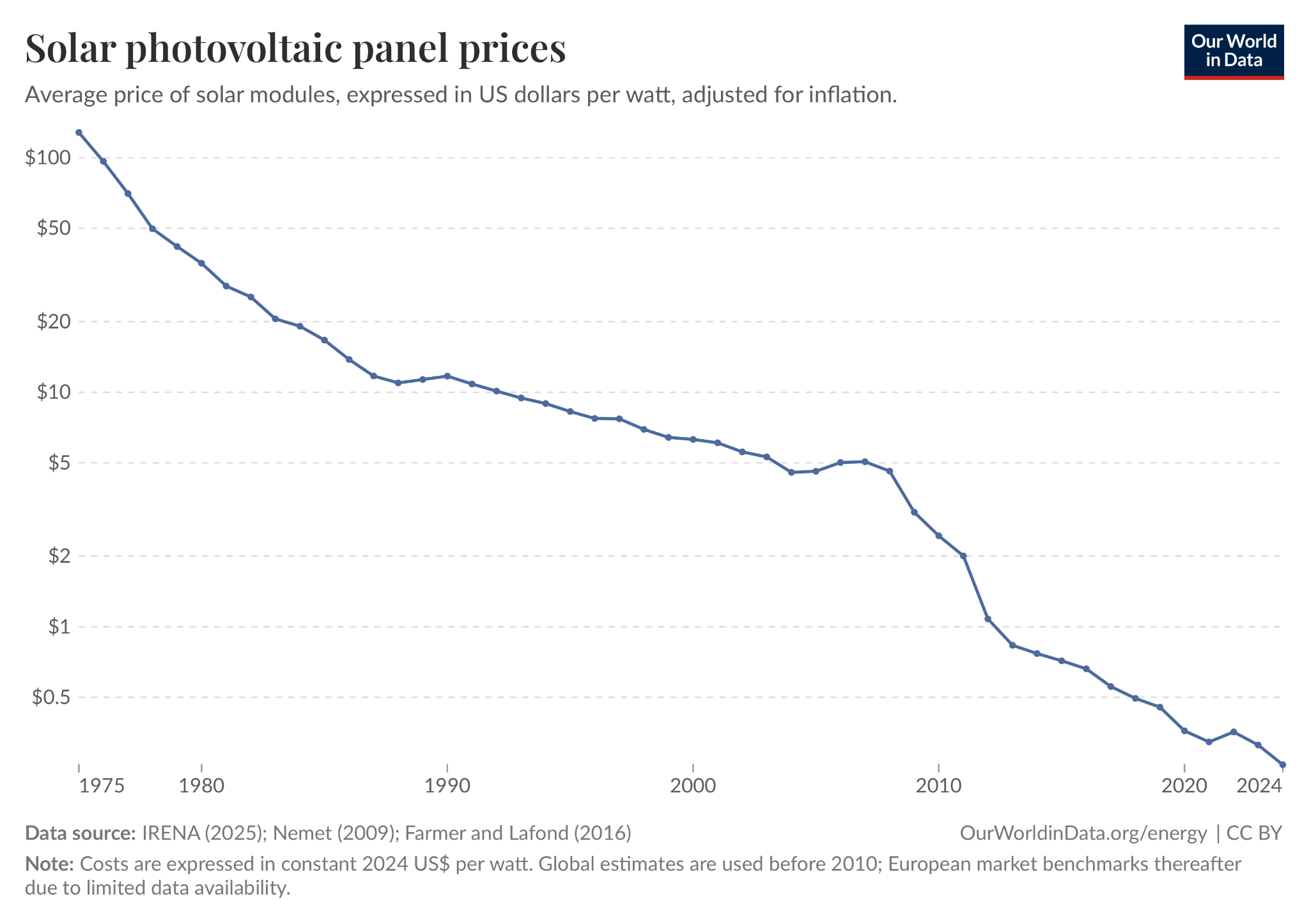
Most people are familiar with the solar PV cost “miracle”:
Source: Our World in Data
But it wasn’t until I read Greg Nemet’s How Solar Became Cheap that I realized how precarious this miracle was. Progress in solar PV wasn’t linear: there was a clear plateau in innovation from the mid-1980s through the mid-2000s. What happened in the early 1980s was a confluence of policy, market, and investment headwinds—but crucially, not technological or engineering challenges:
The Reagan Administration canceled the DOE’s “block buy” program for solar PV panels, where it was one of the largest—if not the largest—customer in the world.
Exxon killed its wholly-owned Solar Power Corporation, depriving the field of a source of innovation and capital.
The Saudis flooded global oil markets to regain market share, removing the impetus
There are eerily-similar features of the carbon removal field today to solar PV back in the 1980s:
The Trump Administration has killed/is slowly killing $Bs in federal carbon removal funding—including direct purchasing just like the “block buy” solar PV program of the 1970s.
Microsoft has announced a pause in its credit purchases
Energy prices and demand are surging with no end in sight, reprioritizing capital away from removals to energy generation.
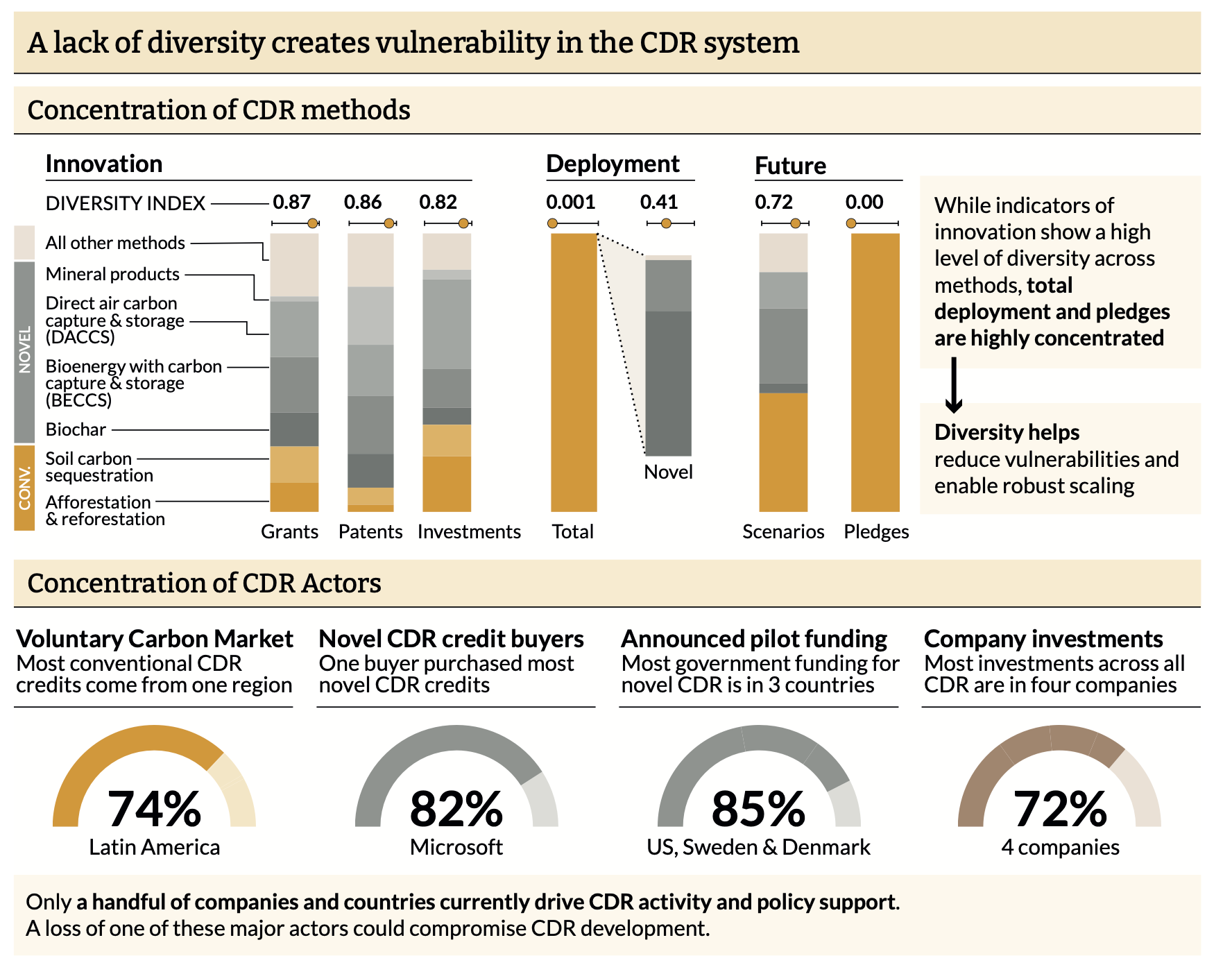
In other words, removal technology is making progress, but policy and market factors are shaping a slow down. The recent State of CDR report frames this lack of diversification as a key risk for the field:
But what this Frontier announcement today shows is that the parallels to solar PV aren’t perfect—and in a good way. Corporate voluntary purchasers are extending the bridge to compliance. Companies like Oxy remain committed to their low carbon ventures.
What the solar PV miracle also shows is that policy is the real magic. Starting in the early 2000s, geographies like Germany and California passed meaningful demand-side policies to support solar PV. China started subsidizing supply-side solar PV manufacturing shortly thereafter. This created a flywheel effect of lower prices and more appetite for policy to scale solutions further.
This is the lesson that everyone should take away from today’s Frontier announcement. Corporate purchasers should take up SBTI’s new voluntary carbon removal challenge, and either commit to scaling Frontier’s growth fund or support parallel efforts. And policymakers should get into high gear to make sure that there are bankable markets with high quality carbon accounting standards and robust supply chains and finance in place to scale the industry in the coming years.
None of these promising signs are guaranteed to turn into real progress. And this announcement is far from enough for the field to scale alone. But it shows that we still have the opportunity to bring a robust carbon removal field to scale over the coming decade if industry and government leaders around the world take small but meaningful steps forward today.