
Part 1: the Carbon Capture Coalition annual meeting
Earlier this week, the Carbon Capture Coalition (CCC) held their annual meeting in Chicago. The CCC consists of environmental groups, industry, and labor organizations that collaborate to develop and advocate for U.S. federal policy related to carbon management. Over the past decade, the coalition has had remarkable success advocating for bipartisan legislation supporting carbon management subsidies (such as the 45Q tax credits and DOE innovation funding) and supporting regulatory developments (such as the EPA Class VI regulatory framework).
Honestly, its success has been borderline unbelievable. Carbon capture is something that only makes sense if (1) you want to stop climate change and/or (2) you are running out of oil (and don’t have enough geologic deposits of CO2 to use for enhanced oil recovery). Yet carbon capture has received at best milquetoast support from big green groups, with many of the most ardent climate activists calling carbon capture a “false solution” and actively opposing supportive policy frameworks. At the same time, the incumbent energy industry is much happier in a world where it can keep using unabated fossil fuels. In this context, securing durable, bipartisan policy support for carbon capture across the Obama-Trump-Biden-Trump Administrations is a minor miracle.
Despite all of this relative policy success, carbon capture projects have failed to materialize at the scale needed to make even a dent on decarbonization. New headwinds have emerged for the field, and broader macroeconomic and political conditions will look remarkably different in the next decade than they did over the past decade. I joined the CCC meeting this week to try and better understand how this community is thinking about the path forward for U.S. carbon management policy given all of these changes. Here’s are my five key takeaways.
1. The playing field for U.S. carbon management policy has evolved considerably since the start of the CCC
When the CCC got started in the Obama Administration, “all of the above” energy policy was a widely supported bipartisan approach. Economy-wide federal carbon regulation (in some form or another) was near-ish on the horizon. AI was science fiction; power demand hadn’t grown in decades. Interest rates, tariffs, inflation, and debt-to-GDP ratios were low. Congress still kinda-sorta worked; the Supreme Court wasn’t on a nakedly partisan crusade against the administrative state. Social media was still new-ish.
Today, none of these conditions persist. “Natural gas is here to stay” was a recurring theme at the CCC meeting this week; indefinite load growth was the baseline assumption. The surge in nation-wide NIMBY sentiment against heavy infrastructure has ensnared carbon management projects in its net. Climate has tumbled down the political agenda, as even vocal climate champions have shifted messaging towards affordability and economic competitiveness frames. Congress and campaign finance felt broken a decade ago; those days now look halcyon.
Every single one of these exogenous changes feels like a headwind for carbon management. It also isn’t apparent what new doors are opening for the field as old doors are closing.
In short, as the need for carbon management for climate has grown, the obvious opportunities to bring it to scale have shrunk. CCC stakeholders are searching widely for new tailwinds. It is clear that the time for creativity and policy entrepreneurship in carbon management are upon us.
2. The elephant in the room: who pays?
The foundational assumption at the start of the CCC was that federal subsidies and a workable regulatory framework for carbon capture projects would lead to early deployments. This commercial activity would prove that carbon management was possible to deploy at scale in a safe and cost-effective manner. By that point, legislators would have enacted some type of economy-wide carbon regulation, and carbon management could plug into this policy framework and live subsidy-free and at a rational scale for the economy to reach zero emissions.
Now, however, the “economy-wide federal carbon regulation is coming soon” leg of the old carbon management policy theory of change is gone. Even in a Democratic trifecta with 60 votes in the Senate, carbon regulations that would raise prices for consumers are seen as dead on arrival.
As a result, advocates are turning even more strongly to the subsidy leg of the carbon management policy theory of change. The only thing brought up by participants at the CCC meeting that was seen as (even potentially) politically viable today is to continue increasing 45Q tax credits. But back to the rising deficits/interest rates story, asking for ever larger taxpayer-funded subsidies for industry to clean up its carbon pollution is as unsustainable as it is bad climate policy.
The only alternative path forward for a sustainable carbon management policy framework that I heard at the CCC meeting was carbon accounting reform. The theory goes that, if we make carbon accounting simple, transparent, and fair, it will enable product-level carbon intensity standards to emerge in the future — first voluntary (via environmental attribute certificates (a.k.a EACs) to help corporates buy clean power and products), then via state and federal policy. If coupled with a carbon border adjustment mechanism, such product-level carbon-intensity standards could provide the stable and bankable U.S. policy framework needed to sustain carbon management deployment in a politically feasible manner.
But this theory is only lightly baked, and isn’t accompanied by meaningful policy design or advocacy strategy discussions. In many ways, carbon accounting is like permitting reform in that both are necessary for fulsome climate policy, but neither are sufficient. In the case of carbon accounting, we haven’t articulated clearly what we actually want to do once standards get enacted — let alone what timelines we should associate with future policies. As a result, claiming that carbon accounting reform is the path forward for carbon management feels akin to saying a new natural gas power plant is “CCS ready” (read: empty promises that unabated projects will install carbon capture at some indefinite point in the future…).
I think a clearer path forward would be to start talking about what regulatory “sticks” might be possible that actually make polluters pay for pollution, while protecting consumers from price increases to the greatest extent possible. The clearest intersection here is data centers: progressive states with an interest in building data centers responsibly should find a win-win in making data centers bring their own clean energy — CCS or otherwise. Tech companies would happily pay for CCS if it didn’t slow down their projects, so negotiating some sort of phased in, tech-neutral clean electricity standard for new power additions seems like a reasonable place to start.
Speaking of…
3. Illinois is poised to become a breakout carbon management leader.
At the CCC event, I learned that Illinois has:
The U.S.’s first Class VI dedicated CO2 storage well.
Ample reserves of beautiful saline storage geology.
The first natural gas combined cycle power plant with CCS to reach FID.
~65Mt of CO2 emissions that are eligible for the 45Q tax credit annually, across a mix of industrial, low-cost ethanol and ammonia, and natural gas power sources.
A robust academic and government community of technical experts on carbon management.
In addition, Illinois is a blue state with real climate goals. In many ways, Illinois is a lot like California… except building CCS projects in Illinois looks way less daunting.
I’m optimistic that Illinois can become a leader in how climate-forward jurisdictions can walk the walk on how to advance carbon management in an optimally beneficial way for the climate and for communities. Illinois could become a lighthouse for how carbon management projects can help achieve climate goals, permit projects quickly and safely, and share benefits of carbon management projects with communities and workers equitably. A state regulation to incentivize polluters to pay for their emissions could tip Illinois into this leadership position quickly.
4. Towards a fit for purpose CCS coalition
The CCC was designed for a political era that is rapidly dwindling. A decade ago, if environmental groups, industry, and labor could agree on climate policy, it was a powerful signal that the legislation was broadly popular.
All of those groups still remain critical constituents. However, they are no longer sufficient for signaling broad support.
Now, it is critical to have more voices. Local voices, including but not limited to environmental justice stakeholders, are essential. So are trade and economic security stakeholders, as climate policy and industrial strategy have increasingly melded together. Different industries are need, especially the big tech companies and large electric utilities that are building mountains of new natural gas power while ostensibly maintaining climate commitments. Few, if any, of these stakeholders are coalition members today.
More stakeholders makes achieving consensus more challenging. But sitting through the CCC meeting, it felt inescapable that we are living in more challenging times, and the carbon capture policy community has to play the hand that it is dealt.
5. Where is climate philanthropy?
I think only a single philanthropy was represented at the CCC meeting this week. My guess is that far less than 1% of U.S. climate philanthropy is spent on constructive carbon management engagement. I’d guess that at least as much funding supports efforts to fight against carbon capture projects (in what I have written as being a misguided and counterproductive bank shot to hurt the fossil fuel industry). But overall, I think it is safe to say that carbon management is by far the most neglected decarbonization solution in the U.S. climate philanthropy portfolio in relation to its importance to overall net-zero targets.
Fixing this imbalance would be incredibly easy. Bolster the CCC and its NGO members’ carbon management teams, and fund a broader range of organizations to participate in the CCC. In addition, new coalitions of climate-forward ENGOs would diversify advocacy in a way that leads to better policy outcomes overall. If even 1% of the >$1B/year in U.S. climate funding supported constructive carbon management engagement, the field could generate substantially more progress.
Part 2: The Global CCS Institute releases ints 2026 Annual Status Report
As a fun coincidence, the Global CCS Institute issued their 2026 Annual Report on the same day as the CCC’s member meeting. The report is always worth a read in full. Here are seven graphics that jumped out to me:
1. North America and Europe have an early head start on CCS deployments. It is now possible to go see many examples of operational CCS projects. The question to me is now: how do we build on this momentum to (1) create a sustainable industry in these regions and (2) enable other geographies to catch up?
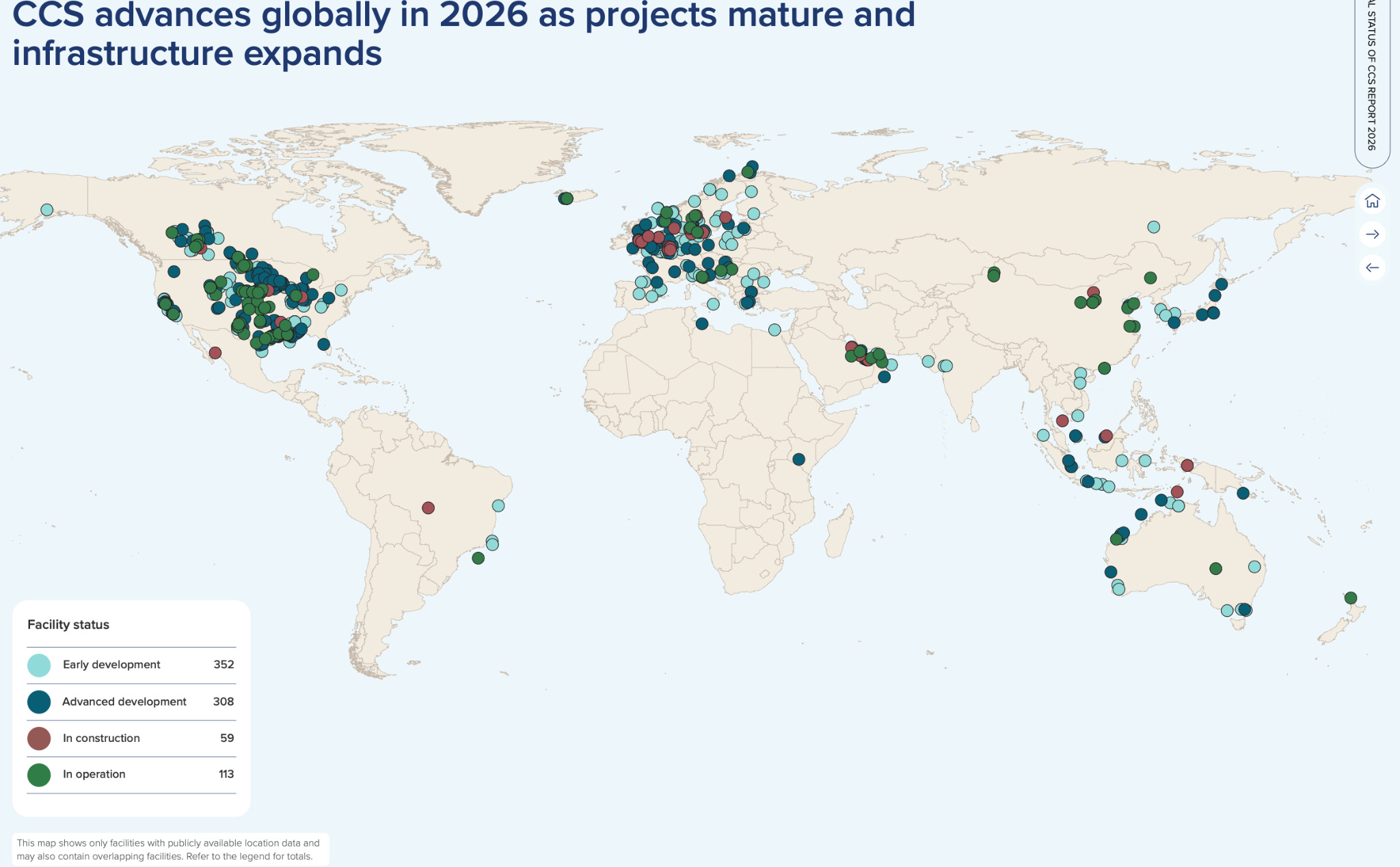
2. The fact that carbon capture is in its deployment phase changes how we talk about the field and steer its growth from here. Specifically, we can start to get more statistically significant evidence about what does and does not work. It also means we should be increasingly skeptical of anecdotes to prove “it works!” or “it’s a false solution!”
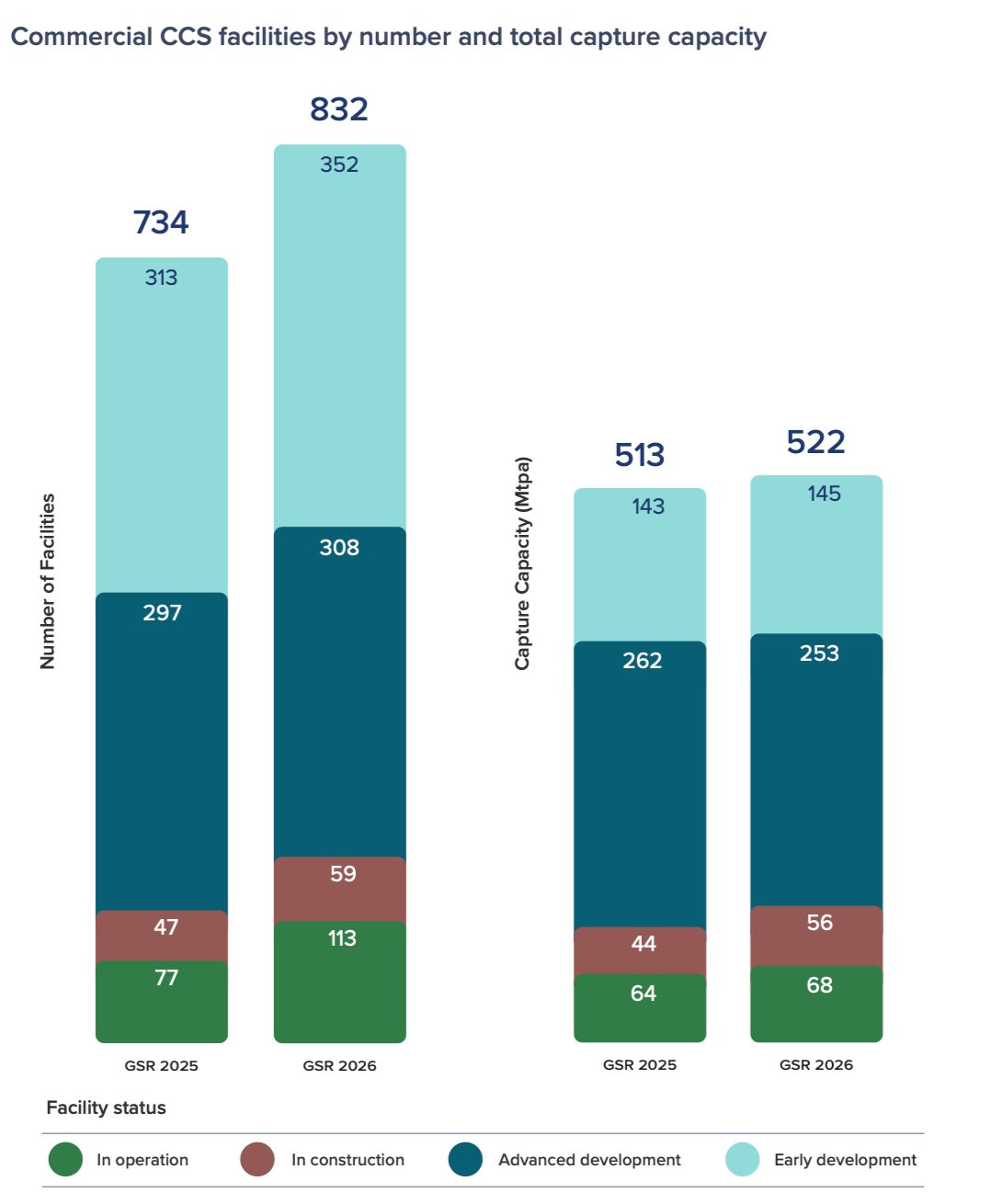
3. But we need more projects on emissions sources that matter the most for climate. The fact that CCS is both a proven technology and that there are no natural gas CCS projects in operation in the U.S. makes the case for CCS policy much harder than if we could point to a few projects when we asked policymakers for the necessary support for more projects.
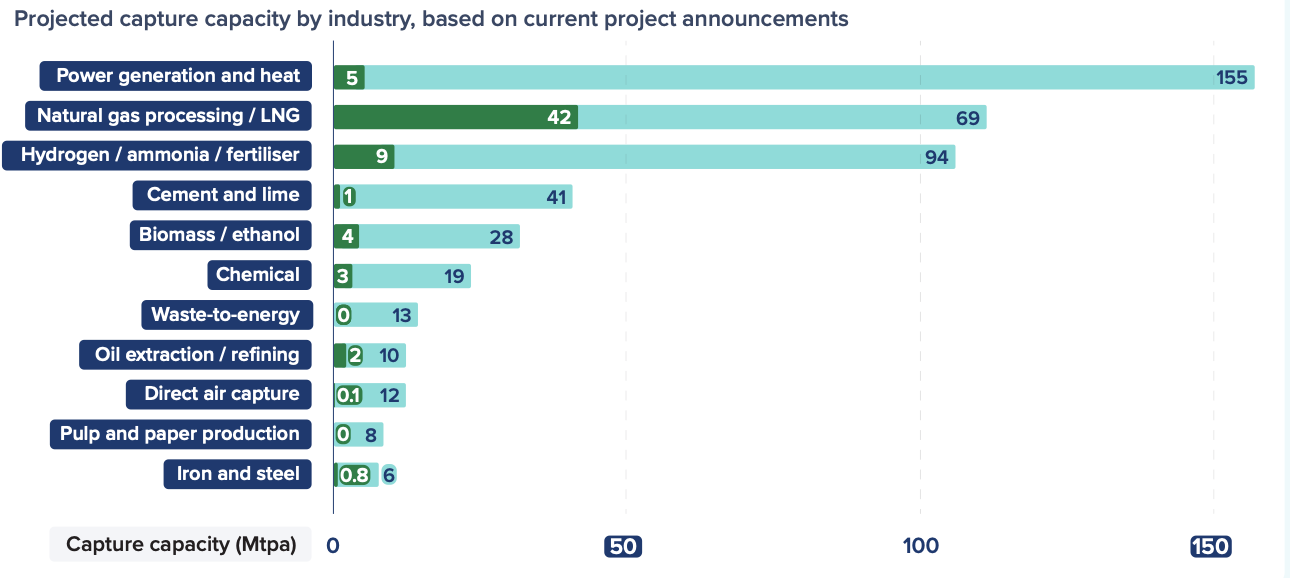
It is also worth noting that “realness” of a project leaps exponentially between the advanced “planning” stage and anything after Final Investment Decision. The number of planned projects is great, but this pipeline should be taken with a grain of salt until the number of green bars (a.k.a. actual projects) increases substantially.
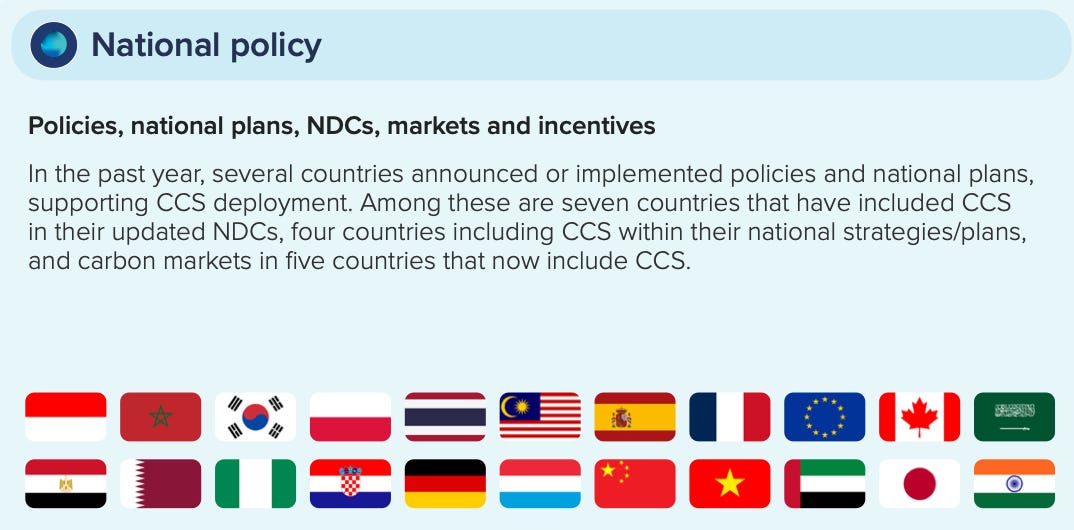
4. Other geographies are developing policy “sticks” to drive the industry forward. The U.S. is an outlier in its “carrot only” policy framework to support CCS projects.
5. Europe is going about CO2 storage the hard way: offshore first. Or maybe it’s the easy, just expensive way — the price of avoiding community opposition. Regardless, CCS is likely to get significantly cheaper in Europe once communities have enough comfort that well-regulated CO2 storage is safe and on-shore projects start to emerge.
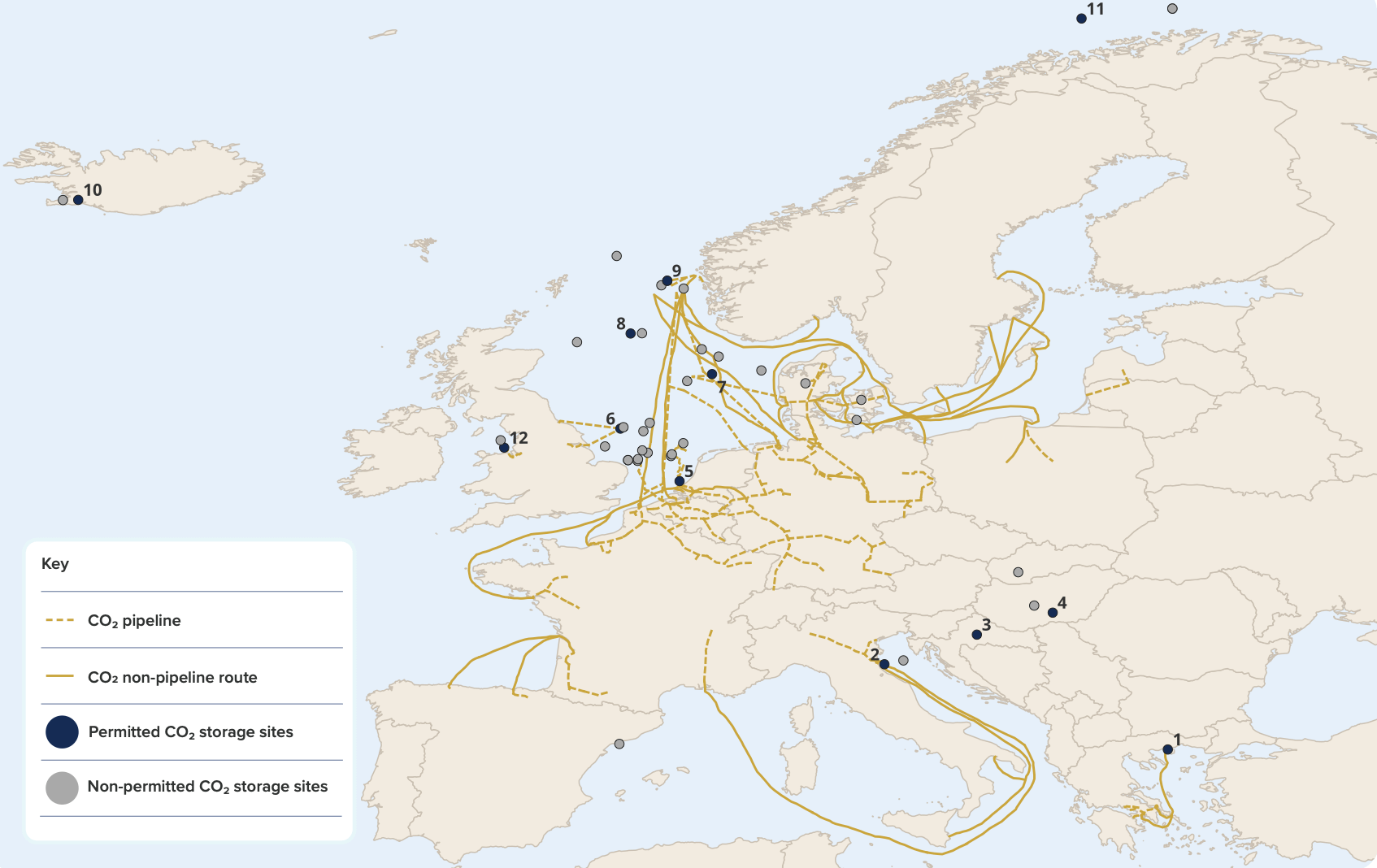
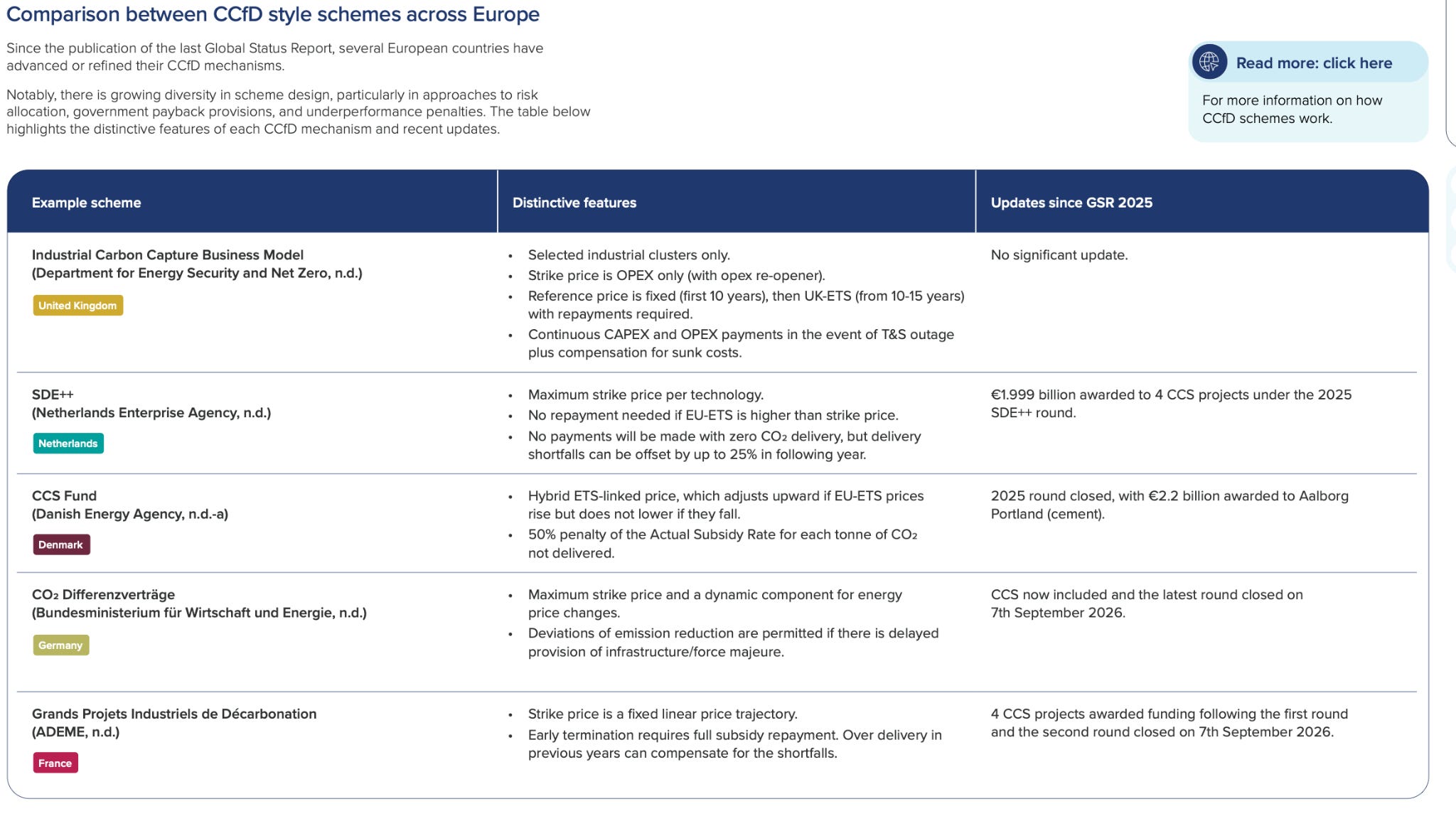
6. Europe’s Contracts-for-Difference approach to opex support is a model that others should look to as best practice. Especially the U.S.
7. This report should be read in conversation with the World Bank’s most recent carbon pricing report and the DOE’s carbon management liftoff reports. Carbon prices around the world are well below what it costs to do CCS today.
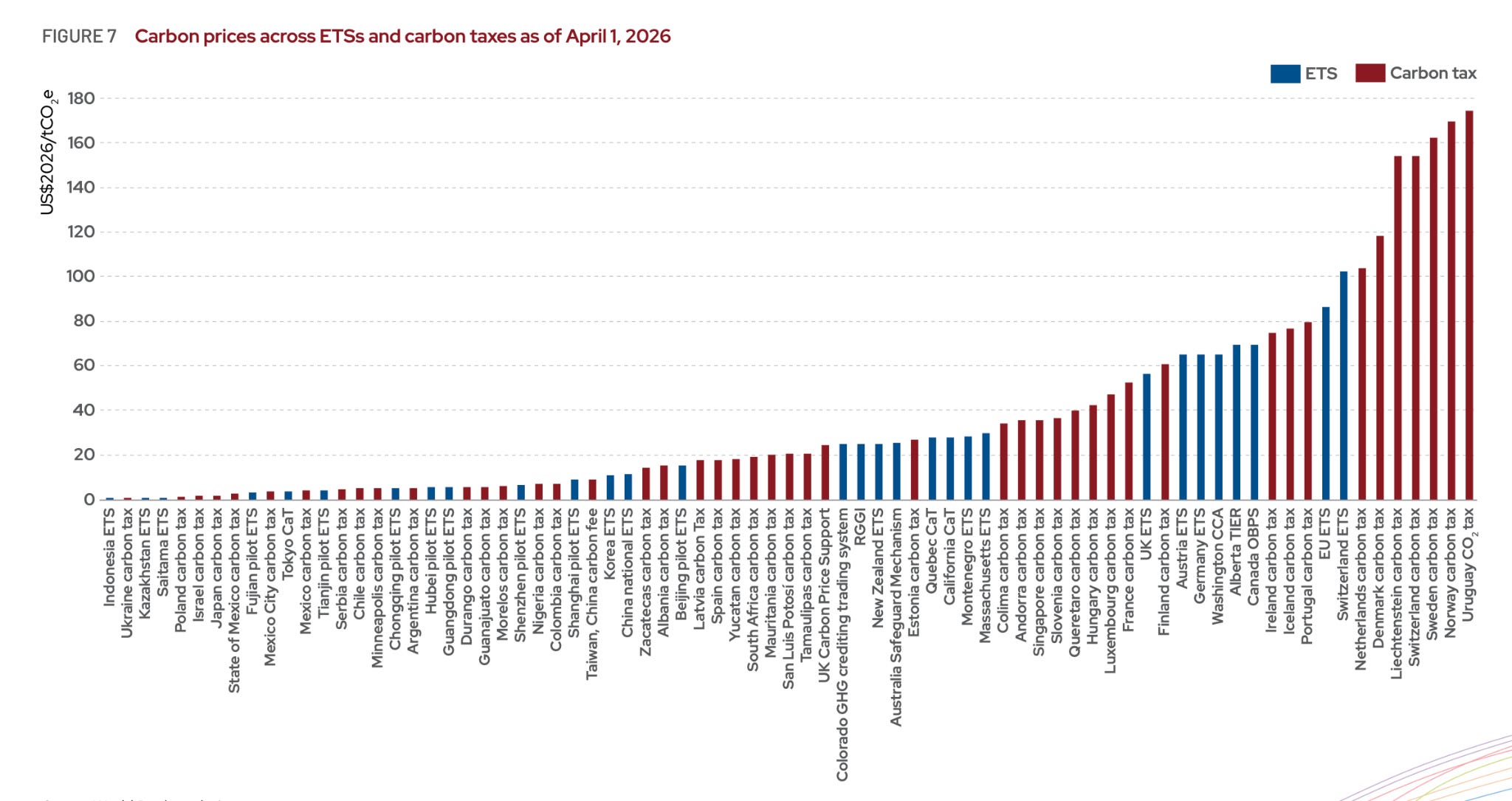
DOE’s now-stale cost estimates from 2023 are the best that I can find… but they are too low by 30-100% based on anecdotal evidence. If costs are high, carbon prices low, then CCS will need (1) large public subsidies and/or (2) regulatory mandates on emitters for the field to scale.
Someone will need to find $10Bs in additional capital to build out the infrastructure for CO2 transport and storage in the coming decade. And someone will need to find the $100Bs in capital to finance the construction and operation of capture technologies. These are achievable albeit significant amounts of capital. But in an era of affordability concerns, macroeconomic headwinds, and increased China-G7 competition (and increasingly distraction of capital from AI build out), it will be increasingly challenging. To bring this full circle with the CCC meeting: the grass doesn’t look particularly greener for carbon capture anywhere else today.
CCS has always been a chicken-and-egg problem, at least outside of the US where demand for CO2 is mainly driven by EOR. Oil and gas majors are afraid of building storage capacity if there isn't the carbon capture and transportation infrastructure in place, and vice versa for industrial facilities looking to CCS to decarbonise. The EU's Net Zero Industry Act placed a responsibility on the majors, but they have since turned very negative towards it.
Your two conditions for carbon capture making sense, stopping climate change and running out of oil for EOR, are different economic animals. EOR-driven capture sells its CO2 into an existing market, so I'd expect it to survive without 45Q. Climate-motivated capture has little revenue without the subsidy, which makes it the kind of project a NIMBY fight or a load-growth-driven gas buildout can starve quietly, without anyone needing to repeal anything.
That split, more than the capture technology, is what I'd use to predict which projects survive a less climate-friendly decade: whether the economics ever left the ground without federal money attached.